Ace Alliance sits down with Barb Tasci, CEO of All-in Global, the iGaming-specialist language service provider now almost in its third decade, to talk about the industry's silent demand for localisation, the real impact of AI, and why no globalisation strategy survives without a local voice.
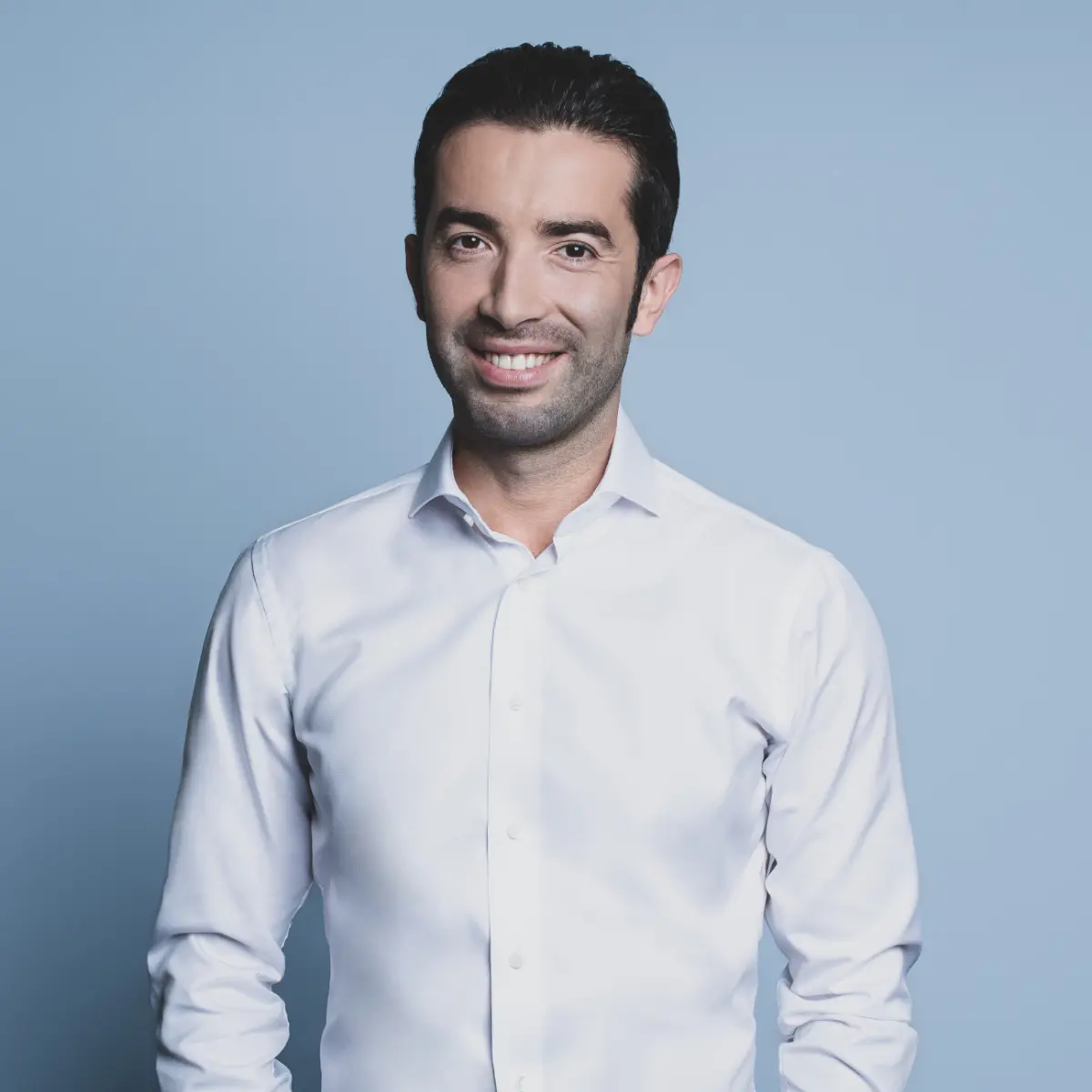 Faruk Aydin :
Barb, you took over a localisation company that’s been in the industry for two decades. What has been your first impression of the localisation industry so far?
 Barb Tasci :
That the industry still demands localisation invisibly, on the contrary to the common belief. iGaming is a heavily performance-driven business: CPAs, traffic, LTVs, conversion rates – those are the buzzwords everyone talks about at every conference. Localisation is loudly demanded by only a few, so you rarely hear it discussed. But look at what the market actually does rather than what it says: every serious operator entering a new market needs native content, compliant wording, and local terminology. The industry wants localisation silently, and that’s what I’ve seen every day since I joined All-in Global. Nobody puts “localisation” on the conference agenda, yet nobody launches a market without it.
Faruk Aydin :
Does that mean you haven’t experienced any negative impact from AI?
Barb Tasci :
Like every online business, we’ve felt the shift. Some clients naturally explored internal AI solutions as they should; testing new technology is good practice. But what we consistently see is the vast majority coming back for the consistent quality and the professional support around it.
In the end, translation output is only one part of what a language partner delivers – terminology governance, market knowledge, accountability when something must be right – and that’s the part a general-purpose model doesn’t replace. We interpret these past couple of years as a transition period, and from where we sit, the market is stabilising.
Faruk Aydin :
So you still see demand for human translation?
Barb Tasci :
Yes. Not at the same volume as before, and that’s simply the adaptation our company, and the whole industry, is going through. But most of our clients still request human translation, precisely because they’ve tested the alternative.
They’re aware that generic LLMs can’t provide the consistency and the brilliance that real localisation requires: the same term rendered the same way across an entire platform, the register that fits the market, the judgement calls a machine doesn’t know it’s making. Human demand hasn’t disappeared; it has concentrated on content where quality is non-negotiable.
Faruk Aydin :
Where do generic AI models fall short in iGaming specifically?
Barb Tasci :
Terminology, consistency, brand voice, and honesty. iGaming has its own vocabulary in every language, and the correct local term is often not the literal translation. Sometimes it’s the English word itself, sometimes a local expression a general model has never seen in context.
Consistency is the second failure: when the same term is translated three different ways across a platform’s terms and conditions, lobby, and support content. That’s not just a style problem. In regulated markets it can become a legal one.
The third is brand voice: generic models flatten everything into the same polished, neutral register, so after translation every brand sounds identical – your tone of voice simply doesn’t survive the round trip.
And then there’s hallucination, which is the most critical in my opinion. Generic LLMs confidently invent things, such as a term that doesn’t exist in the market, a condition that was never in the source text. In marketing copy that’s embarrassing; in bonus terms, it’s a liability. Fluency is easy now. Getting the industry’s language right, consistently, in your own voice, without inventions is still the hard part, and it’s where specialist data and human oversight earn their place.
Faruk Aydin :
Regulation keeps tightening across Europe. How much of localisation is now really a compliance exercise?
Barb Tasci :
A growing share. Regulators increasingly scrutinise the exact wording of bonus terms, responsible gambling messaging, and marketing claims, in the local language, not just in the English master.
And the requirements don’t travel: while some markets regulate the precise wording that must appear in promotions, others treat the tone of the copy itself as a compliance criterion, and others restrict offers so tightly that a mistranslated promo header can turn a legal offer into an illegal one. That patchwork is exactly why simple translation can’t cover the need.
The same sentence can be compliant in one market and a violation in the next. Compliance teams tend to review the English carefully, and almost nobody audits the other twelve languages with the same rigour. That gap is where the risk lives, and closing it is robust localisation work, not translation work.
Faruk Aydin :
What would be your advice to operators and affiliates planning new market entries?
Barb Tasci :
Treat localisation as part of the market-entry strategy, not just a simple check before launch. Lock the terminology and your brand voice for the market before translating a single page. Localise the money path perfectly – registration, deposit, bonus terms, withdrawal, support – because that’s where trust is won or lost. And most importantly, have the languages you can’t read audited by someone independent.
Every failed market entry I’ve seen had the same pattern: everything was ready except the part the players actually engage with. Without localisation, they are just a bunch of content that everybody skims without any second look.
Faruk Aydin :
What is the biggest localisation mistake you see in the industry?
Barb Tasci :
Rushing without planning, and not paying enough attention to details. This is a fast-paced industry, and we see brands launching new GEOs almost overnight, with sloppy localisation across the board: mixed dialects, inconsistent terminology, outright mistranslations. Brazil was a textbook case.
Brands wanted to go live as fast as possible, and plenty launched with European and Brazilian Portuguese mixed on the same website. But in the end, the ones that played the long-term game, doing it properly from the start, were the ones that sustained active acquisition and, more importantly, consistent retention. And the same pattern repeats in almost every market where locals speak a “global” language: the language may be shared, but the market never is.
Faruk Aydin :
What’s your go-to solution when brands do want to launch in a new GEO fast?
Barb Tasci :
Even when there’s no time or budget to do the localisation fully professionally, having a native expert review what you’re about to publish, especially the pages players actually spend more time on, increases the success rate dramatically. Speed and quality aren’t the trade-offs people think they are: you can launch fast and still let someone who reads the language catch the mistakes that cost you retention later. Launch quickly if you must, but don’t do it blindly.
Another thing I can suggest is that even if the localisation is done by a professional, it would be wise to get those pages reviewed on the live environment to double-check and prevent mistranslations, typos, misplacements.
Faruk Aydin :
How do you see iGaming localisation moving forward?
Barb Tasci :
It is no secret that AI is reshaping the industry, and localisation is no exception, even if the full transformation isn’t here yet. The direction is clear: localisation is moving from a file-based, project-based service into something continuous, running inside the content pipelines themselves, with AI handling the volume and humans governing terminology, compliance, and quality.
That’s the wave we’re riding with CRAIG, our own AI solution built on the company’s two decades of iGaming translation expertise. Machine speed where speed matters, specialist judgement where it doesn’t forgive mistakes. The companies that combine both will define the next phase of the industry’s growth.
The technology will keep changing, but the principle behind it won’t: global growth starts with the right localisation. Anything else is just delayed failure.
AI just changes how the localisation gets done, not whether it’s needed.
Faruk Aydin :
“Anything else is just delayed failure” – why put it that strongly?
Barb Tasci :
Because the industry keeps proving it. Expansion into a new market isn’t achieved when your platform is technically available there – it’s achieved when a player in that market feels the product was made for them.
The market data backs it up: the best-performing brands in any GEO are consistently the ones with a solid local presence and properly executed localisation. Brands that try to stay “global” with an English-only page can still get some traction as affiliates and promotions will drive the clicks, but that traffic never converts into what actually compounds: brand recognition, trust, and retention.
Overall, acquisition can be bought in English; loyalty is built in the local language. So yes, I put it that strongly: Globalisation is only possible with localisation.
Faruk Aydin :
And where do you see All-in Global in the future?
Barb Tasci :
As the language backbone of iGaming’s growth. Wherever this industry expands next – new markets, new verticals, new formats – someone has to make global brands sound local, compliant, and trustworthy. That’s the role we’ve played for two decades and the one we intend to own: not the biggest agency, but the partner the industry quietly relies on every time it goes somewhere new.
That’s the role we’ve played for two decades and the one we intend to own: the partner the industry quietly relies on every time it goes somewhere new. You can globalise the technology and the product, but until you localise, you haven’t really arrived at your target markets.
A big thank you to Barb Tasci for sharing his perspective on AI, regulatory compliance, and the role of localisation in successful iGaming expansion. To learn more about this iGaming-specialist language service provider offering human and AI-powered localisation, visit All-in Global.
Stay tuned for more expert conversations in our Ace Alliance Interviews, where we explore the people, companies and ideas shaping the iGaming industry.



