

Ace Alliance Horizon & Speed Rome
Early Bird Passes Available! | November 2, 2026
Get Your Pass!
Table Of Content :

Australia Advances Gambling Ad Reforms After Bipartisan Deal

trust
Ace Alliance: Delivering Trust Through Expertise
From exclusive events and interviews to real-time market trends, Ace Alliance brings you unbiased, well-informed, and data-driven content. Our editorial team adheres to strict editorial standards, ensuring that the information you receive is not only relevant but also trustworthy.

Built by market experts hosting events since 2023, with our first event in Riga, Latvia gathering over 300 top level iGaming industry executives, Ace Alliance is able to provide you with reliable information from direct interaction with experts and leaders in the sector.
Altay
Altay Celikkaya
Content Manager
Updated:
Reading Time: 4 minutes

Australia’s Labor government has secured Coalition support for an amended package of federal gambling reforms, clearing the main political obstacle to tighter advertising and inducement controls. The Interactive Gambling Amendment (Gambling Reform) Bill 2026 passed the House of Representatives on 18 August by 96 votes to nine and is expected to reach the Senate this week. The proposed framework would establish a national online advertising opt-out register, extend broadcast restrictions, and impose new obligations on licensed wagering operators, affiliates, and digital platforms. The measures are not yet enacted, and several technical and implementation details remain unresolved.
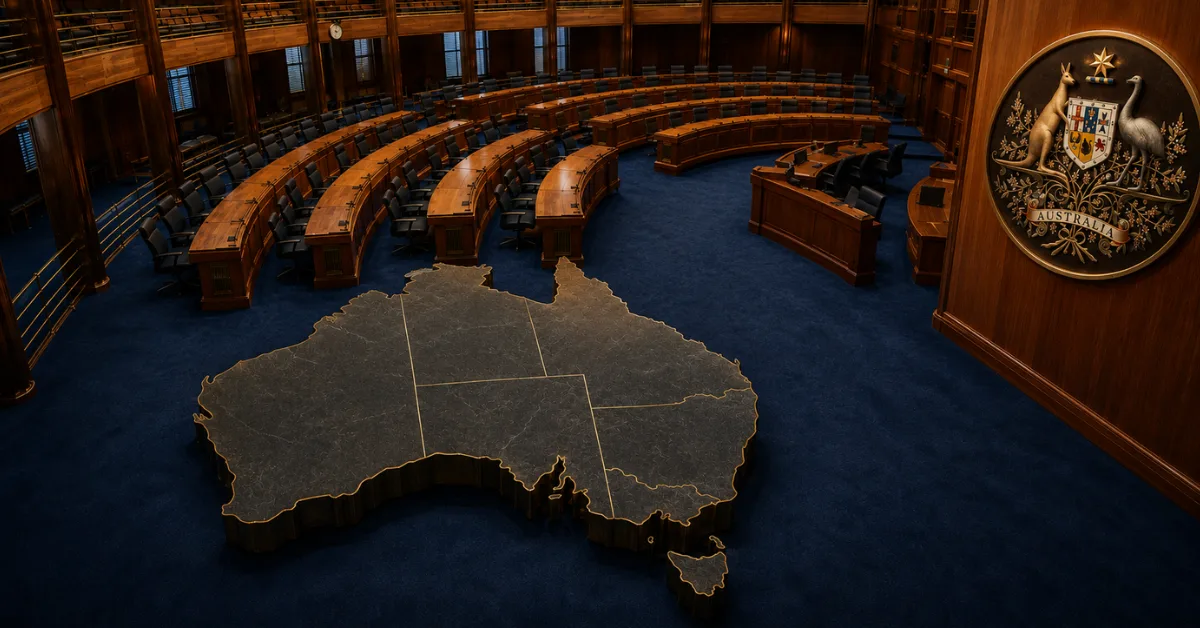
Australian map inside parliament, representing bipartisan gambling advertising reform.

Regulation & Compliance

Key Takeaways From Australia’s Gambling Advertising Reform Deal

  • Coalition support makes Senate passage likely, although the package remains proposed legislation until it completes parliament and receives Royal Assent.

  • A national Wagering Advertising Opt-out Register would provide consumers with a central mechanism for blocking wagering ads across covered online platforms.

  • The register would complement, rather than replace, existing requirements covering logged-in adult users and platform-level opt-out controls.

  • ACMA would administer and enforce the register, with licensed interactive wagering providers funding the associated costs through an industry levy.

  • Television advertising would be capped at three wagering ads per hour between 5 am and 8.30 pm, while the pre-game live-sport blackout would increase to 15 minutes.

  • Inducement-based marketing would face targeted restrictions, and commission arrangements linked to customer losses would be prohibited for staff and affiliates.

  • The mandatory three-year review creates a critical policy milestone and could lead to tighter restrictions if the measures prove ineffective in reducing gambling harm.

Central Register Adds a Second Layer of Digital Control

The proposed Wagering Advertising Opt-out Register would give consumers one place to stop wagering advertisements across covered online services. ACMA would establish, administer and monitor the system.

The register would sit alongside the original bill’s “triple-lock” framework. Online wagering advertisements could be served only to logged-in adults, who would have a platform-level option to opt out. The register would provide an additional route across multiple services without removing platforms’ existing responsibilities.

The technical design has not been finalised. ABC News reported that users may need to submit identifiers such as an email address and details of their platform accounts. It remains unclear whether ACMA would distribute suppression information or require services to check their records against the register. The final model will shape requirements covering identity matching, privacy and record-keeping.

A separate Interactive Gambling (Cost Recovery Levy) Bill 2026 would allow ACMA to recover the costs of administering and enforcing the register and related inducement controls from licensed interactive wagering providers rather than taxpayers. The approach builds on Australia’s broader industry-funded gambling harm prevention framework.

Broadcast and Sports Advertising Inventory Tightens

The bipartisan amendments would move the start of the three-advertisements-per-hour television cap from 6 am to 5 am, with the restriction continuing until 8.30 pm. They would also extend the live-sport pre-game blackout from five to 15 minutes, prohibit wagering advertising during children’s programming and apply equivalent live-sport restrictions to covered online services. ACMA has already demonstrated its strict interpretation of existing live-sport advertising controls through its gambling advertising ruling against SBS.

Those measures build on the government’s original advertising package. The bill would prohibit wagering ads in sports venues and on players’ and officials’ uniforms, restrict radio advertising during school drop-off and pick-up periods and ban the use of athletes, celebrities and influencers in wagering promotions. Advertisements promoting sporting odds would also be prohibited.

Broadcasters and streaming providers will need to classify inventory by channel, time, programme type and proximity to live sport. Sports bodies and operators must also review sponsorship assets, venue signage, uniform agreements and campaign creative.

Inducement Controls Extend to Risk and Affiliate Systems

The revised package introduces more specific controls on inducement-based direct marketing. Such marketing would be prohibited during the first 14 days after a customer opens an account, for 90 days after a person leaves the BetStop national self-exclusion register and where an operator has identified a customer as being at risk of gambling-related harm.

Licensed providers would need documented processes to identify higher-risk customers and apply exclusions across direct marketing channels. The amendments would also prohibit commission arrangements tied to customer losses for staff, agents and affiliates, affecting remuneration structures and referral contracts.

The measures remain narrower than the comprehensive restrictions recommended by the 2023 parliamentary inquiry. The inquiry’s You win some, you lose more report called for a phased ban on online gambling advertising and a blanket prohibition on inducements. The government’s model instead preserves advertising within defined limits and targets inducements during specified periods of heightened risk.

Senate Passage Likely as Implementation Questions Remain

Coalition backing makes Senate approval likely, but the package remains proposed legislation. The political debate was also reflected in the Senate inquiry into Australia’s gambling reform package, which examined the proposed advertising controls before the latest bipartisan compromise. MPs Pat Conaghan and Andrew Wallace crossed the floor in the House, while the Greens and several crossbenchers argued that the agreement falls short of the 2023 inquiry. Responsible Wagering Australia has raised concerns about complexity and competition from unlicensed offshore gambling services.

The government’s published timetable says the core reforms are scheduled to commence on 1 January 2027. However, the launch date and operating rules for the central opt-out register have not been confirmed, and reporting indicates that the system may not be ready when other measures begin.

Operators, affiliates and platforms must prepare for the scheduled restrictions while monitoring secondary rules and ACMA compliance guidance. The three-year review will assess the effectiveness of the register, broadcast caps and inducement controls.