





Brazil has blocked more than 60,000 illegal betting websites as the Ministry of Finance expands enforcement beyond domain restrictions. Carlos Renato Resende, undersecretary for Monitoring and Enforcement at the Secretariat of Prizes and Betting (SPA), disclosed the cumulative total during an 11 August hearing of the Chamber of Deputies’ External Commission on Acts of Piracy and the “Legal Brazil” Agenda.
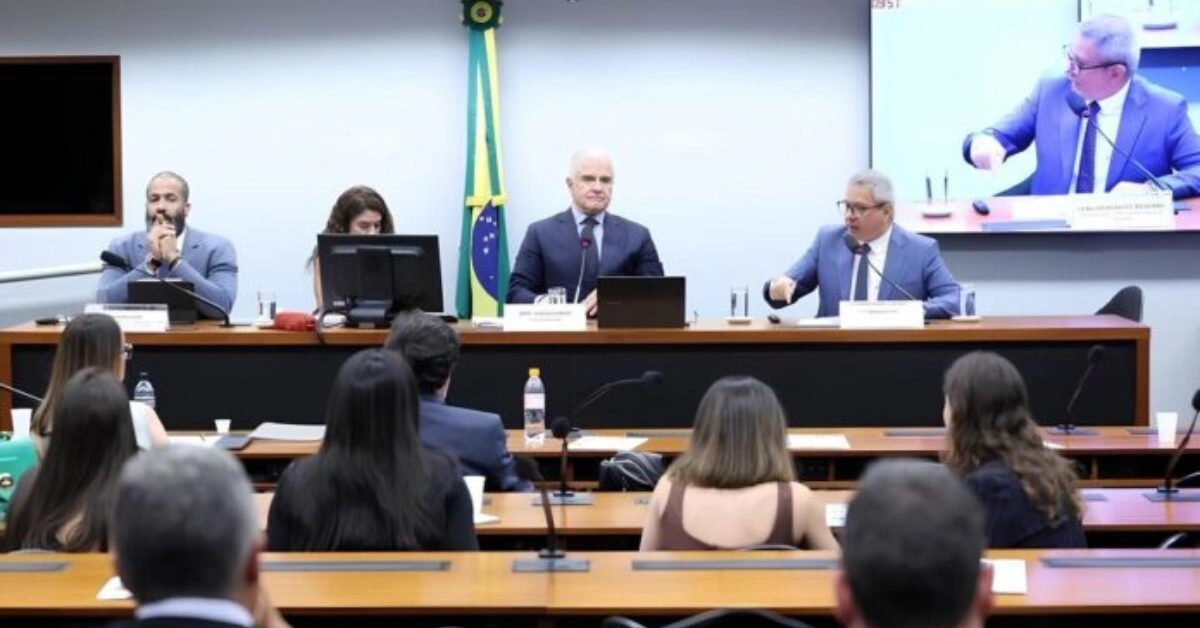
Source: Kayo Magalhães/Câmara dos Deputados
Brazil’s Betting Enforcement Push at a Glance
- More than 60,000 illegal betting websites have been blocked.
- Domain blocking, initially handled manually, has been automated since October 2025.
- New financial-system rules are expected to be published by early September.
- Authorities plan to freeze funds linked to illegal operators and allow fraud victims to seek reimbursement.
- Brazil’s federal audit court has called for coordinated enforcement involving financial, telecommunications, tax and policing authorities.
- A new survey estimates that illegal betting represents between 38% and 41% of the Brazilian market.
- The findings suggest progress in channelisation, but unauthorised activity remains substantial.
Automated Blocking Replaces Manual Controls
The SPA began manually identifying domains for restriction in January 2025 before automating the process in October. Resende acknowledged the continuing enforcement challenge during the Chamber of Deputies hearing.
Nowhere in the world has an illegal market been eradicated. In Brazil, we have other markets subject to piracy, and the difficulty is the same.
The cumulative total also shows how quickly unauthorised domains can be replaced. Brazil’s first-year regulated betting results showed that authorities had restricted more than 25,000 offshore sites during 2025. The latest figure is more than twice that level, although it counts websites rather than distinct operators.
Financial Rules Target Illegal Betting Funds
Brazil is now preparing measures aimed at the money supporting unauthorised platforms. The Ministry of Finance is working with the National Financial System on additional rules that it expects to publish by early September.
Under the planned process, funds linked to illegal betting companies could be frozen. Consumers who can demonstrate that part of a frozen balance belongs to them following fraud would be able to request reimbursement. If an operator cannot establish the money’s lawful origin, the remaining funds would be forfeited to the state and allocated to the National Public Security Fund.
The proposals build on Brazil’s existing restrictions on financial services for unauthorised betting, which require banks and payment providers to interrupt identified transactions. The latest announcement adds more detail about how frozen balances could be handled following an intervention.
TCU Calls for Coordinated Enforcement
Several of the measures follow recommendations contained in TCU Ruling 1296/26, approved in May. The Tribunal de Contas da União, Brazil’s federal audit court, examined government controls intended to combat illegal betting and associated money laundering.
During the hearing, TCU official Wesley Vaz called for coordinated action involving the Ministry of Finance, Central Bank, Federal Revenue Service, National Telecommunications Agency (Anatel) and Federal Police. He said authorities needed to improve domain blocking, interrupt financial flows and sanction illegal operators.
Resende also said Brazil’s anti-faction and organised crime legislation had introduced mechanisms intended to prevent illegal betting businesses from being used to launder money.
Survey Points to a Smaller Illegal-Market Share
A separate Instituto Locomotiva survey, presented at the same hearing, estimated that illegal betting represents between 38% and 41% of Brazil’s market. The previous estimate, presented by LCA Consultoria and based on Instituto Locomotiva’s 2025 research, placed the range between 41% and 51%.
The latest survey was conducted in May among 2,291 people nationwide. Its findings suggest that the unlicensed share may be narrowing, but they should not be treated as a direct measurement of revenue or as evidence that website blocking alone caused the change.
For licensed operators, the survey suggests that channelisation may be improving, although unauthorised betting still accounts for a substantial estimated share of the market. The next material development will be the publication of the financial-system rules and details of how fund freezes and consumer reimbursement claims will operate in practice.