Ace Alliance Horizon & Speed Rome
Early Bird Passes Available! | November 2, 2026
Get Your Pass!
Table Of Content :

Louisiana Class Action Targets DraftKings and FanDuel Over Sportsbook App Design

trust
Ace Alliance: Delivering Trust Through Expertise
From exclusive events and interviews to real-time market trends, Ace Alliance brings you unbiased, well-informed, and data-driven content. Our editorial team adheres to strict editorial standards, ensuring that the information you receive is not only relevant but also trustworthy.

Built by market experts hosting events since 2023, with our first event in Riga, Latvia gathering over 300 top level iGaming industry executives, Ace Alliance is able to provide you with reliable information from direct interaction with experts and leaders in the sector.
Altay
Altay Celikkaya
Content Manager
Updated:
Reading Time: 3 minutes

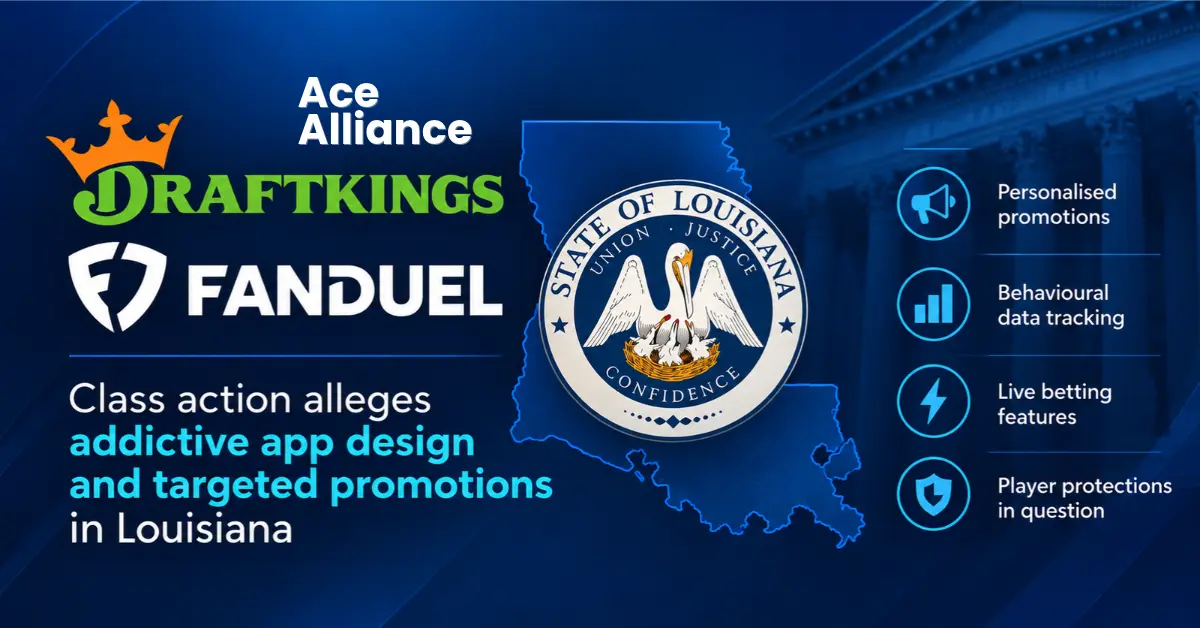
Two mobile sports betting operators, DraftKings and FanDuel, have been named in a proposed class action alleging they deliberately design apps to encourage addictive gambling behaviour. The lawsuit was filed on 22 October 2026 in the Orleans Parish Civil District Court. It focuses on personalised promotions, behavioural data and specific product features.

The lawsuit also named two land-based casinos, Amelia Belle Casino and Bally’s Baton Rouge. These operators hold state licences linked to the sportsbooks’ operations in Louisiana. The plaintiffs allege that the companies target customers already showing signs of harmful gambling behaviour.

Louisiana class action questions sportsbook app design, targeted promotions and player protection.

Regulation & Compliance

Key Takeaways From the Louisiana Sportsbook Lawsuit

  • Three New Orleans residents have filed a proposed class action against DraftKings, FanDuel and two Louisiana casino partners.

  • The plaintiffs allege that the companies use personalised promotions and behavioural tracking to encourage continued gambling.

  • The complaint challenges live-betting design features and the effectiveness of existing player protections.

  • The plaintiffs are seeking refunds, financial compensation and damages relating to alleged gambling harm.

  • The court has yet to decide whether the case can proceed as a class action.

Product Liability Claim Draws Attention to the Way Apps Are Built

The lawsuit alleges that the defendants use customer data to identify betting behaviour and then deliver targeted promotional messages.

The plaintiffs highlight three product features in particular: the ability to place in-play bets rapidly, targeted bonus offers, and repeated notifications. They argue that these features make it difficult for vulnerable customers to stop gambling.

The filing also questions the effectiveness of existing customer safeguards, including whether customers can override account limits without a cooling-off period.

Three Plaintiffs Seek Compensation for Gambling Losses

Rather than relying solely on gambling regulations, this legal challenge is based on the Louisiana Products Liability Act. The plaintiffs argue that sportsbook apps should be treated as products that can cause harm through defective design.

The court has not yet determined whether the legislation applies to these digital services.

Jennifer Hoekstra, the plaintiffs’ lawyer, said:

Louisiana law protects consumers from dangerously designed products, and we are asking a Louisiana court to apply it here.

The lawsuit comes amid growing scrutiny of sportsbook product design. It follows another lawsuit involving the NFL, DraftKings and FanDuel over microbetting features, which raised similar concerns about betting formats that allow wagers to be placed quickly and repeatedly.

According to the complaint, the three plaintiffs, Adrian Payton, Toi Smith and Yolanda Perkins, are all New Orleans residents who have each wagered more than $20,000 through one or both sportsbook platforms.

Payton alleges that FanDuel encouraged further betting through deposit matches and promotional bonuses. Smith claims social media ads initially drew her to sportsbook apps. Perkins reports placing a substantial number of wagers across DraftKings and FanDuel.

The lawsuit seeks reimbursement for alleged financial losses, emotional distress, and medical treatment expenses, along with refunds of net deposits and certain fees.

However, the amount wagered does not equal the amount lost. The reported betting totals therefore do not establish how much each plaintiff lost.

Why Casino Licence Partners Have Been Named

Including Amelia Belle Casino and Bally’s Baton Rouge distinguishes the Louisiana lawsuit from other cases focused exclusively on digital operators.

These two casinos are named as licensing partners supporting mobile sportsbook operations in the state.

Both DraftKings and FanDuel appear on the Louisiana Gaming Control Board’s list of licensed wagering platforms as authorised sportsbook operators.

This arrangement could be important in determining how legal responsibility may be shared among technology providers, sportsbook operators, and the local casinos holding the relevant licences.

The Louisiana case adds to growing legal scrutiny over how gambling companies use customer data and personalised marketing strategies to encourage betting activity.

State regulators are examining similar concerns through different approaches.

In Massachusetts, the Gaming Commission has asked seven sportsbook operators for information on how they use artificial intelligence in personalised marketing. The inquiry focuses on how operators use customer data, promotional targeting and automated systems when interacting with players.

Meanwhile, New Jersey’s mandatory data-driven responsible gambling rules require licensed operators to monitor risky betting patterns and introduce appropriate interventions when signs of potential gambling harm are identified.

For sportsbooks, CRM providers, and affiliate marketing businesses, the Louisiana lawsuit highlights potential legal risks tied to personalised customer engagement and betting app design.

Although no court has ruled that DraftKings or FanDuel violated Louisiana law in this case, the outcome could shape future discussions about sportsbook product design, marketing accountability, and player protection.