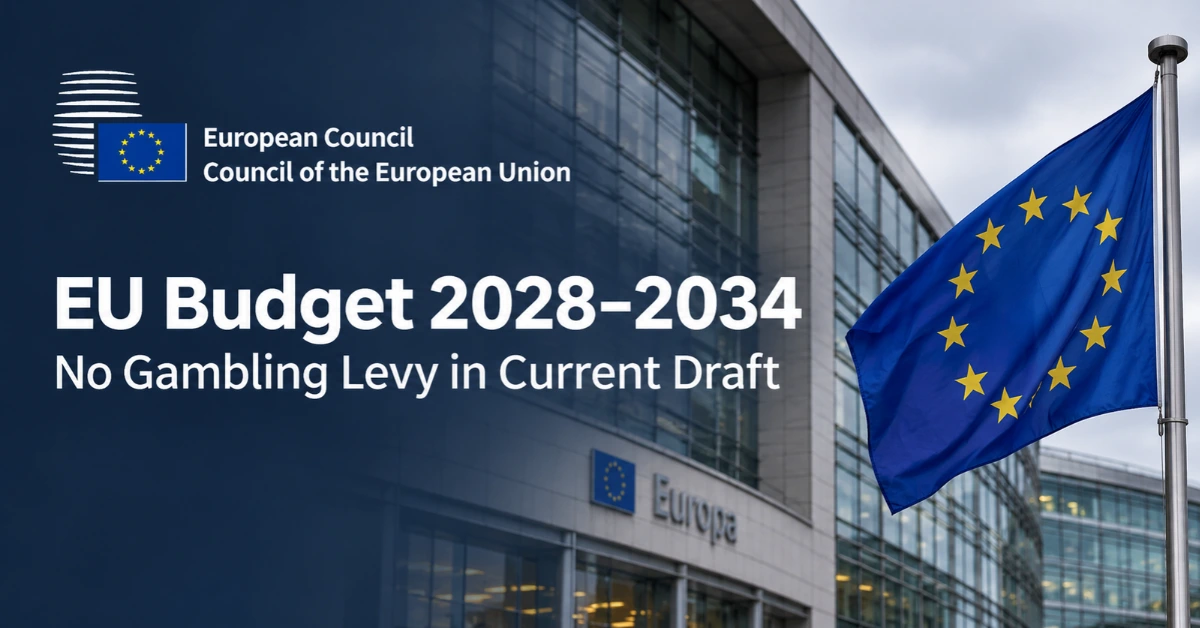
Home News EU Budget Proposal Leaves Out Online Gambling Levy as Leaders Continue Negotiations
EU Budget Proposal Leaves Out Online Gambling Levy as Leaders Continue Negotiations
EU Identifies Five New Revenue Streams
According to the European Council’s revised long-term budget proposal, Costa has identified five new funding sources covering digital services, carbon border adjustment revenues, non-recycled electronic waste, tobacco products and emissions trading. The proposed budget is €204 billion lower than the European Commission’s original proposal in current prices, reflecting efforts to limit increases in national contributions while financing the EU’s strategic priorities.
The digital services measure includes a proposed 3% contribution on qualifying revenues from online advertising, digital intermediation and user-generated data. It would apply to companies meeting the relevant European and global turnover thresholds.
Although this measure is not a gambling-specific tax, larger businesses operating within the digital advertising and affiliate marketing ecosystem may need to assess their potential exposure as the legislative framework develops.
Online Gambling Levy Remains Outside the Negotiating Framework
In April 2026, the European Parliament identified online gambling and betting taxation as a potential alternative funding mechanism should other proposed revenue sources fail to secure sufficient support from member states. Costa’s latest proposal maintains the position established in October, when Ireland’s revised EU budget framework excluded the online gambling levy.
The omission is particularly relevant to operators managing multiple national licences and taxation regimes. An additional EU-level charge could introduce further administrative requirements and increase operating costs across regulated European markets. However, the absence of a dedicated gambling levy from the current proposal does not prevent the measure from returning during subsequent negotiations.
National Gambling Tax Pressures Continue Across Europe
While the proposed EU-wide gambling levy remains outside the latest budget framework, individual European jurisdictions continue to reassess their domestic gambling taxation policies. Estonia has proposed freezing its online gambling tax at 5.5% from July 2027, reversing plans for further reductions.
Meanwhile, Italy’s 2027 budget proposal includes higher gambling taxes for parts of its gaming machine sector. These developments illustrate the importance of distinguishing EU-level funding discussions from national fiscal policies when assessing market profitability, operating costs and long-term investment decisions.
What Comes Next for European iGaming Operators?
Following discussions on 26 November, European Council President António Costa acknowledged that further negotiations would be necessary.
Costa said:
Finally, on new own resources, we will continue to work.
A political agreement between EU leaders is still required before the long-term budget can progress towards formal adoption, which also requires the European Parliament’s consent. For European iGaming operators, suppliers and affiliates, the immediate priority remains monitoring both EU budget negotiations and domestic tax reforms. While the current proposal introduces no dedicated EU-wide gambling levy, the final funding framework remains subject to political and legislative negotiations.