





Political consensus regarding the long-term structural role of Finland’s state-owned gambling operator, Veikkaus, has fragmented as the country prepares to dismantle its long-standing monopoly. According to a comprehensive parliamentary survey conducted by the national public broadcaster Svenska Yle, a sharp ideological divide has emerged regarding whether the state should retain full equity ownership, partially divest, or execute a total corporate sale before the end of the decade.
The debate comes as the country aligns its financial expectations for the operator. Operational figures provided by sector specialist Jari Vähänen indicate that while Veikkaus currently generates roughly €450 million in annual gaming surplus directly for the state treasury, its total enterprise value is roughly ten times that amount, sitting at an estimated €4.5 billion.
Under current structural breakdowns, the corporate assets split into two distinct operational matrices:
- The Competitive Division: Comprising digital casino and sports wagering operations, which are valued between €1 billion and €1.5 billion. This segment will face direct commercial rivalry from approximately 40 international brands currently seeking localised licensing.
- The Protected Monopoly Division: Valued at roughly €3 billion, this ring-fenced sector will continue to hold exclusive physical rights over land-based slot machines, instant scratch cards, and legacy draw operations like Lotto, which generated a margin of €116 million in 2025 alone.
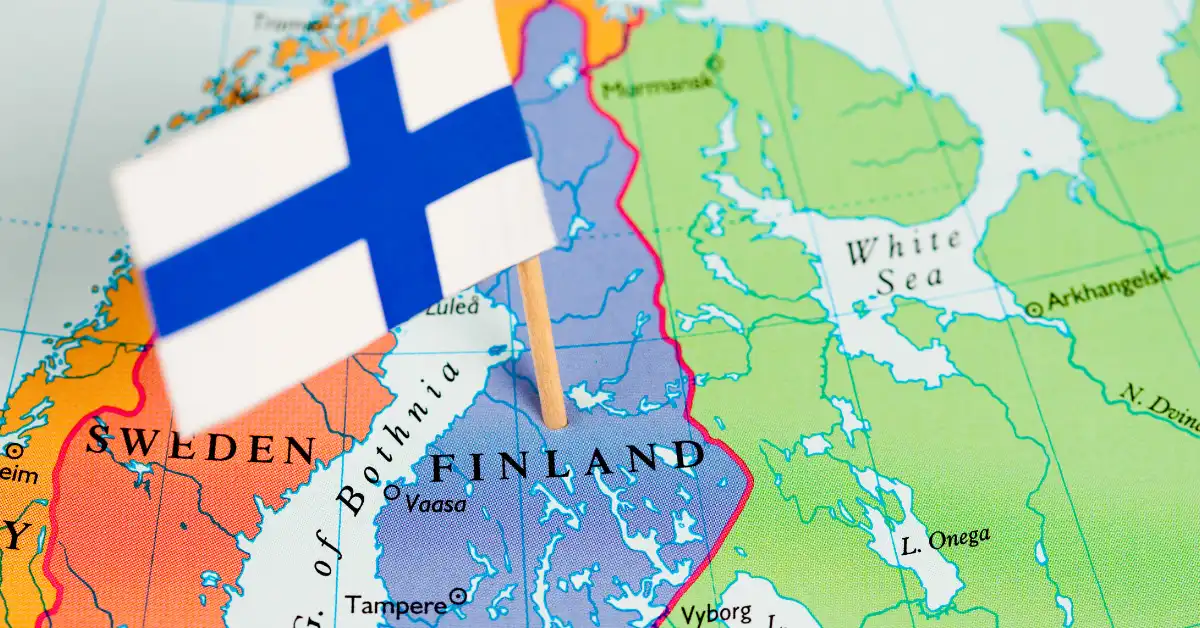
Factional Splits: Opposition Opens the Door, Left Alliance Says No
The upcoming transition to a competitive multi-license system on July 1, 2027, has fundamentally altered how political factions view the state’s fiduciary duties. The Social Democratic Party (SDP), currently leading the opposition, has executed a significant policy shift by signalling strong openness toward a full or partial corporate divestment.
SDP Party Secretary Mikkel Näkkäläjärvi clarified that the fall of the monopoly model removes the primary justification for direct state equity.
The state has in this situation no particular strategic interest in owning a gaming company.
Näkkäläjärvi stated to Svenska Yle, adding that the ultimate decision must rest on whether the liquidation capital can be deployed into areas yielding superior public and economic benefits.
This position is largely shared by the Centre Party (Keskusta), with MP Mika Lintilä affirming that Veikkaus can no longer be classified as a strategic asset for the state in the same manner as previous decades, predicting that a sale will inevitably remain a primary legislative talking point. Concurrently, the populist Movement Now (Liike Nyt) has advocated for the most aggressive commercial path, pushing for a complete sell-off via an initial public offering (IPO) on the stock exchange.
In contrast, the Left Alliance (Vasemmistoliitto) stands alone as the only parliamentary faction explicitly rejecting any privatisation plans. Left Alliance MP Timo Furuholm argued that while Veikkaus lacks the critical national infrastructure profile of state assets like Finnair or Neste, its reliable, recurring revenue flow to the state treasury should be preserved rather than liquidated for short-term gains.
Government Coalition Adopts a Cautious, Fragmented Posture
While opposition groups openly debate monetisation strategies, the ruling government coalition parties have adopted a highly guarded stance. The National Coalition Party, which leads the current government, refused to commit to a definitive position, stating that any specific corporate adjustments require exhaustive administrative preparation to evaluate wider market conditions and societal effects.
The Swedish People’s Party (SFP) took an even more restrictive approach, completely refusing to speculate on the matter. Because SFP politician Joakim Strand currently serves as the Minister for European Affairs and Ownership Steering, the party asset office declared that speculating on active holdings would be irresponsible for governing leadership.
The remaining coalition partners expressed deep scepticism regarding a sale:
- The Finns Party (Perussuomalaiset): Highlighted the long-term fiscal danger of trading permanent income for a singular corporate payout. Political Planner Juhani Huopainen noted:
The risk is that a one-time income is used for current expenditures. A cow that milks can only be sold once.
- The Christian Democrats: Warned against viewing the operator strictly through an economic lens, insisting that gambling harm prevention and addiction mitigation must dictate any future structural adjustments.
- The Green Party (Vihreät): Maintained a neutral baseline but stipulated that if a sale ever progresses, the state must legally retain a significant, commanding ownership stake in the company.
This deep focus on protecting domestic frameworks from unchecked commercial exposure mirrors wider international regulatory movements. Sovereign states continue to adjust policy parameters to anchor remote gambling platforms under highly defined commercial parameters to prevent economic and social leakage.
Technical Milestones and Devaluation Risks
Despite the sudden influx of inquiries from major international gaming conglomerates looking to acquire Veikkaus to secure immediate market leadership, state officials have confirmed that an asset sale is off the table for the immediate future. Maija Strandberg, Director General of the Government Ownership Steering Department (Valtioneuvoston kanslian omistajaohjausosasto), stated that a transaction is highly unlikely within the next few years, pointing to 2030 as a more realistic timeline.
Strandberg emphasised that the state will not consider broadening the operator’s ownership base until three non-negotiable criteria are satisfied:
- The underlying domestic legislation must explicitly permit ownership changes.
- The company’s internal commercial structures must be in optimal health.
- The broader market conditions must prove highly favourable.
Furthermore, Strandberg noted that Veikkaus’s historic monopoly performances carry little weight in an open market. The company must first demonstrate its operational viability and channelisation efficiency under the competitive framework before its commercial value can be accurately validated by external investors.
However, delaying the process carries distinct financial risks. Industry consultant Jari Vähänen confirmed that informal analysis regarding a sale has already been conducted by ministry officials, warning that a prolonged transition could harm the state’s asset value. Vähänen pointed out that Veikkaus’s operational returns have nearly halved over the last five years, noting that once the market officially opens in July 2027, the incoming influx of competitive digital platforms could trigger further market share losses, rapidly depressing the company’s €4.5 billion valuation.
This emphasis on securing market stability and establishing rigid compliance baselines before altering ownership frameworks matches defensive actions taken in alternative digital spaces. Similar structural priorities are visible across other jurisdictions, such as when regulators implement strict technical domain restrictions to insulate digital spaces until stable localised monitoring networks are fully operational. As the Ministry of Finance continues preparing the licensing infrastructure for the 2027 launch, the Eduskunta is expected to utilise upcoming legislative sessions to formalise the corporate boundaries separating Veikkaus’s monopoly assets from its competitive digital operations.