

Ace Alliance Horizon & Speed Rome
Early Bird Passes Available! | November 2, 2026
Get Your Pass!
Table Of Content :

FINTRAC Fines Two Canadian Gaming Corporations C$631,538 Over AML Failures

trust
Ace Alliance: Delivering Trust Through Expertise
From exclusive events and interviews to real-time market trends, Ace Alliance brings you unbiased, well-informed, and data-driven content. Our editorial team adheres to strict editorial standards, ensuring that the information you receive is not only relevant but also trustworthy.

Built by market experts hosting events since 2023, with our first event in Riga, Latvia gathering over 300 top level iGaming industry executives, Ace Alliance is able to provide you with reliable information from direct interaction with experts and leaders in the sector.
Altay
Altay Celikkaya
Content Manager
Updated:
Reading Time: 3 minutes

Canada’s intelligence agency has imposed penalties totalling C$631,538.50 on two Atlantic gaming corporations after identifying failures in suspicious transaction reporting and anti-money laundering controls.

FINTRAC published the decisions on 3 September 2026. The penalties were imposed in July and paid in full, meaning both cases are closed. The findings concern compliance with Canada’s anti-money laundering and anti-terrorist financing regime. They do not establish that either corporation laundered money or knowingly enabled criminal activity.
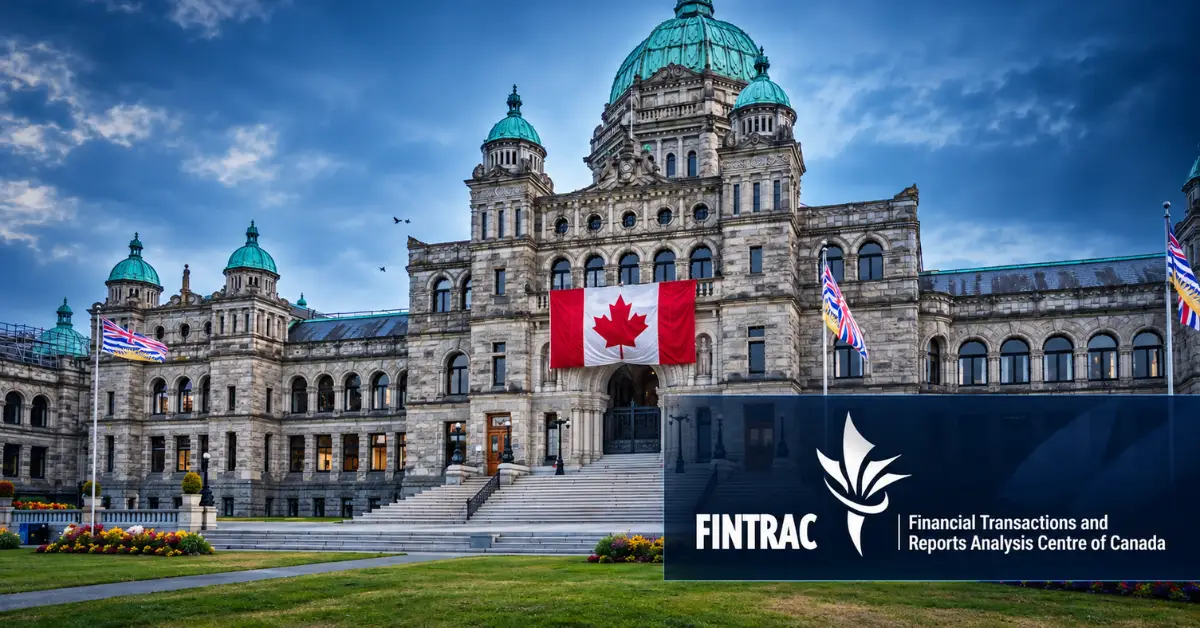
FINTRAC logo displayed beside a Canadian government building following AML penalties against two gaming corporations

Regulation & Compliance

Key Takeaways From FINTRAC’s C$631,538 AML Penalties

  • FINTRAC imposed combined penalties of C$631,538.50 on two provincial gaming corporations.

  • New Brunswick failed to submit three suspicious transaction reports despite risk indicators.

  • Nova Scotia missed two reports and had deficiencies in policies and enterprise-wide risk assessment.

  • Both organisations paid their penalties in full and FINTRAC considers the cases closed.

  • The decisions show that transaction-monitoring technology cannot replace documented governance and escalation processes.

New Brunswick Penalised Over Missed Reports

FINTRAC imposed a C$399,712.50 penalty on New Brunswick Lotteries and Gaming Corporation on 24 July. The corporation committed one very serious violation for failing to file three suspicious transaction reports when reasonable grounds for suspicion existed.

The cases included common identifiers used by unrelated players, shared credit cards, links between unconnected parties and suspected false identification. FINTRAC cited excessive prepaid-card deposits and chargebacks that could indicate unauthorised use.

These findings matter across the Canada gambling market because automated alerts only create value when teams investigate, document and escalate them. For stakeholders assessing provincial structures, the New Brunswick online casino market provides context on how gaming oversight operates locally.

Nova Scotia Case Exposes Wider Governance Gaps

Nova Scotia Gaming Corporation received a C$231,826 penalty on 23 July for three violations. FINTRAC found that it failed to submit two suspicious transaction reports involving attempted transactions. Indicators included shared player details, suspected false or stolen identification, difficulty establishing identity, and chargebacks.

However, the Nova Scotia case extended beyond missed reports. Its written compliance policies did not fully document and apply ministerial directives. The corporation also lacked a documented enterprise-level assessment covering money laundering and terrorist financing risks across its overall activities.

The first violation was classified as very serious, while the policy and risk-assessment failures were classified as serious. The Nova Scotia online casino landscape offers jurisdictional context for businesses monitoring how provincial gaming models interact with federal financial-crime obligations.

Why AML Governance Matters Beyond Monitoring Software

The distinction between the cases is important. New Brunswick demonstrates a breakdown at the point where player activity should have triggered reporting. Nova Scotia shows how the same exposure can be amplified by incomplete policies, weak documentation and inadequate enterprise oversight.

Effective AML compliance therefore requires more than software capable of identifying unusual activity. Operators and gaming bodies need clear thresholds, trained investigators, accountable senior officers, current written procedures, and evidence showing how risks are assessed across products, payment methods, and customer segments.

This direction is visible internationally. AMLA’s 2026 consultation on a unified AML/CFT framework focuses on risk-based supervision and more consistent suspicious transaction reporting. For gaming executives, the practical lesson is that alerts, case management, governance, and regulatory reporting must operate as one connected control environment.

Enforcement Pressure Is Building

FINTRAC’s public penalty register shows that the two corporations are not isolated cases. Atlantic Lottery Corporation was also fined C$212,025 in 2026, while the regulator reported a record 35 notices of violation across all sectors in 2025–26.

Stéphane Sirard, FINTRAC’s acting director and chief executive, said:

We will take firm action, when it is required, to ensure that businesses do their part.

Canadian gaming enforcement is also extending beyond financial crime. Ontario’s AGCO recently fined Booming Games C$70,000 over a prohibited autoplay feature, reinforcing the wider expectation that regulated businesses continuously test their controls.

For B2B leaders, the message is direct. Compliance must be demonstrable at transaction, policy, and enterprise levels before an examination begins.