Ace Alliance Riga
Ace Alliance Riga
Event Agenda | August 6-7, 2026
Sold Out
Table Of Content :

India’s Online Gaming Ban Moves Toward Final Supreme Court Hearing

trust
Ace Alliance: Delivering Trust Through Expertise
From exclusive events and interviews to real-time market trends, Ace Alliance brings you unbiased, well-informed, and data-driven content. Our editorial team adheres to strict editorial standards, ensuring that the information you receive is not only relevant but also trustworthy.

Built by market experts hosting events since 2023, with our first event in Riga, Latvia gathering over 300 top level iGaming industry executives, Ace Alliance is able to provide you with reliable information from direct interaction with experts and leaders in the sector.
Altay
Altay Celikkaya
Content Manager
Updated:
Reading Time: 5 minutes

India’s Supreme Court is preparing to hear final arguments over the country’s blanket ban on online real-money games. The case will test whether Parliament can prohibit skill-based and chance-based products under one framework, with potentially significant consequences for operators, investors and India’s digital gaming market.

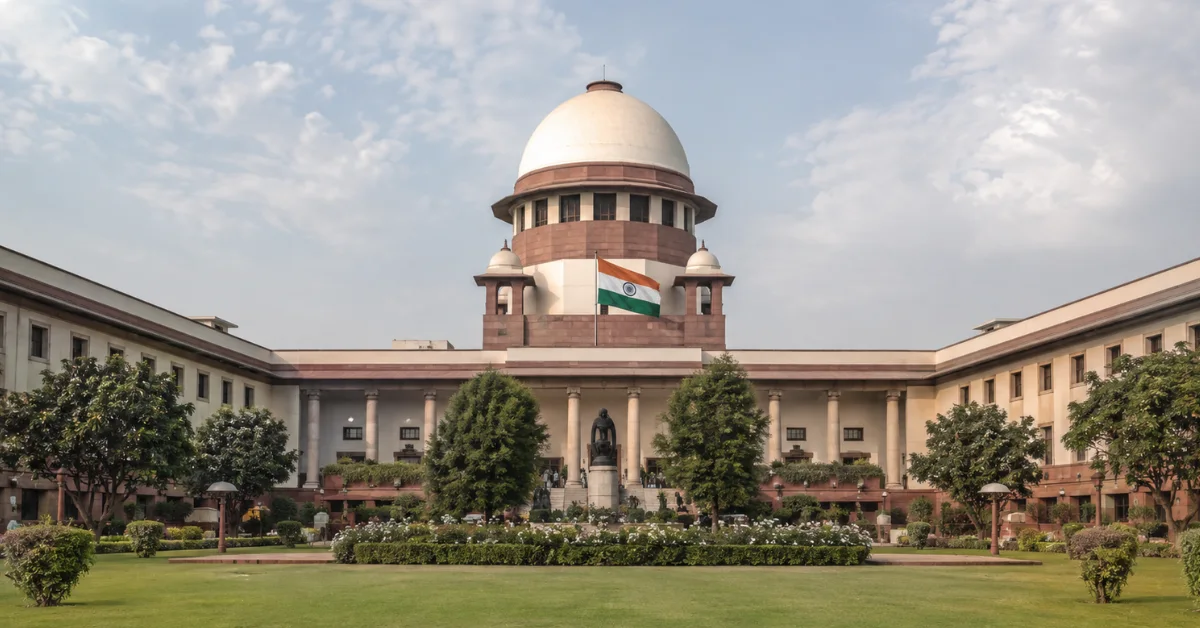
India’s national flag displayed outside the Supreme Court, illustrating the legal challenge to the country’s online gaming ban.

Regulation & Compliance

Key Takeaways From India’s Online Gaming Court Challenge

  • India’s Supreme Court has moved the constitutional challenge against the 2025 Online Gaming Act toward final adjudication.

  • The law prohibits all online real-money games, including products involving skill.

  • Petitioners claim the ban violates constitutional protections for equality, business activity, livelihood and personal choice.

  • The court will consider whether Parliament’s law encroaches on powers constitutionally assigned to India’s states.

  • No judgement has been delivered, and the nationwide prohibition remains in effect.

Supreme Court Advances Challenge Against Gaming Ban

India’s Supreme Court has agreed to move toward a final hearing on petitions challenging the Promotion and Regulation of Online Gaming Act 2025. According to The Economic Times, the Court instructed the petitioners and the Union Government to complete their pleadings before final arguments begin.

The Supreme Court’s official cause list confirms that the case was listed on 5 August. It identifies the lead industry challenge as Head Digital Works v Union of India, T.C.(C) No. 133/2025, alongside ten connected matters. Head Digital Works, which operates the A23 Rummy platform, is among several businesses and individuals contesting the legislation. The case is being considered by a three-judge bench.

The petitioners argue that the blanket prohibition is arbitrary and disproportionately restricts lawful business activity because it treats skill-based games and games of chance alike. They have also challenged the law on grounds including equality, livelihood, personal choice and the division of legislative powers between Parliament and India’s states. The Court has not suspended or overturned the legislation. Operators, advertisers and payment providers therefore remain subject to the existing prohibition while the proceedings continue.

Court To Examine Skill And Chance Distinction

At the centre of the dispute is the Act’s treatment of every online real-money game under the same prohibition. Section 5 bans online money games without distinguishing between products based mainly on skill and those based on chance. This represents a departure from the distinction previously applied in several Indian court decisions and state regulatory frameworks.

The Supreme Court Observer’s case summary identifies five principal constitutional questions. These include whether the blanket ban violates the right to equality under Article 14 and whether it creates an unreasonable restriction on the right to conduct a lawful trade or business under Article 19(1)(g). The court will also examine arguments concerning livelihood and personal choice under Article 21, as well as whether the Union Government received excessively broad powers to classify and regulate online games.

For operators, the court’s eventual treatment of skill-based games could be the most consequential element of the case. A ruling that the distinction remains constitutionally significant could require the government to reconsider the scope or structure of the prohibition. However, the court could also find that the risks associated with staking money online provide sufficient grounds for a uniform national restriction.

Federal Powers Form Part Of The Dispute

The case also raises questions about the division of legislative authority between India’s central government and its states. Betting and gambling fall under Entry 34 of the State List in the Seventh Schedule to the Constitution. Petitioners contend that the central Act may therefore intrude on powers reserved for state legislatures. Before the national prohibition, India had a fragmented regulatory environment. Nagaland, Sikkim and Meghalaya operated licensing systems for certain online skill games, while other states imposed their own restrictions or exemptions.

The Promotion and Regulation of Online Gaming Act introduced a uniform national framework that superseded much of that state-level variation. Challenges were initially brought before the Karnataka, Madhya Pradesh and Delhi high courts. At the Union Government’s request, the Supreme Court transferred the cases to itself in September 2025 to prevent conflicting judgements. The final decision could consequently determine more than the legality of one prohibition. It may clarify how regulatory authority over digital gaming is divided between Parliament and the states.

India’s Ban Has Already Reshaped the Market

Parliament passed the Online Gaming Act in August 2025, and the legislation received presidential assent the following day. The government subsequently brought the framework into effect in 2026. The law prohibits the provision, promotion and facilitation of online real-money games. It also restricts advertising and payment services connected to prohibited products.

Several major operators suspended their real-money offerings after the legislation was adopted. The restrictions also affected marketing platforms, sponsors, payment providers and international companies with exposure to India. As Ace Alliance previously reported, Google updated its India-specific gambling advertising policy to prohibit promotions for rummy and daily fantasy sports.

That decision further reduced the customer-acquisition options available to businesses connected to the sector. It also demonstrated how India’s legislation has influenced commercial policies beyond the operators directly covered by the ban. The Act treats non-monetary esports and social games separately, allowing the government to promote recognised forms of digital gaming while prohibiting products involving monetary stakes and potential winnings.

Enforcement Raises Stakes For Operators

India has continued enforcing the prohibition while the constitutional proceedings remain pending.

In January, authorities blocked 242 betting and gambling websites, bringing the total number of blocked platforms to more than 7,800. The action formed part of a wider enforcement campaign targeting illegal gambling operators and their supporting advertising and payment networks. This enforcement activity means the Supreme Court challenge is not an abstract legal dispute. Its outcome could affect businesses that have already withdrawn products, reduced investment or changed their operating models in response to the law.

The case also includes a public-interest petition seeking stronger action against betting and gambling platforms allegedly continuing to operate under the appearance of social or esports products. The court will therefore consider competing demands: industry petitions seeking constitutional limits on the ban and arguments calling for more extensive enforcement against illegal platforms.

Ruling Could Define India’s Digital Gaming Framework

The Supreme Court’s eventual judgement could establish a significant precedent for India’s gaming industry. If the court upholds the Act in full, the decision would reinforce the government’s authority to maintain a national prohibition covering both skill-based and chance-based real-money games. If the challenge succeeds wholly or partly, Parliament may need to revise the legislation, restore a distinction between different game categories or return greater regulatory authority to individual states.

For operators, suppliers and investors, the central issue is whether India will retain its prohibition-led system or move toward a more differentiated framework. The case is now advancing toward final consideration, but no decision date has been announced. Until the Supreme Court delivers its judgement, India’s online real-money gaming ban remains fully operative.