Home News KSA Tightens Checks After Fraudulent Quick Boys Lottery Licence
KSA Tightens Checks After Fraudulent Quick Boys Lottery Licence
Fraudster Used Quick Boys Identity to Secure Licence
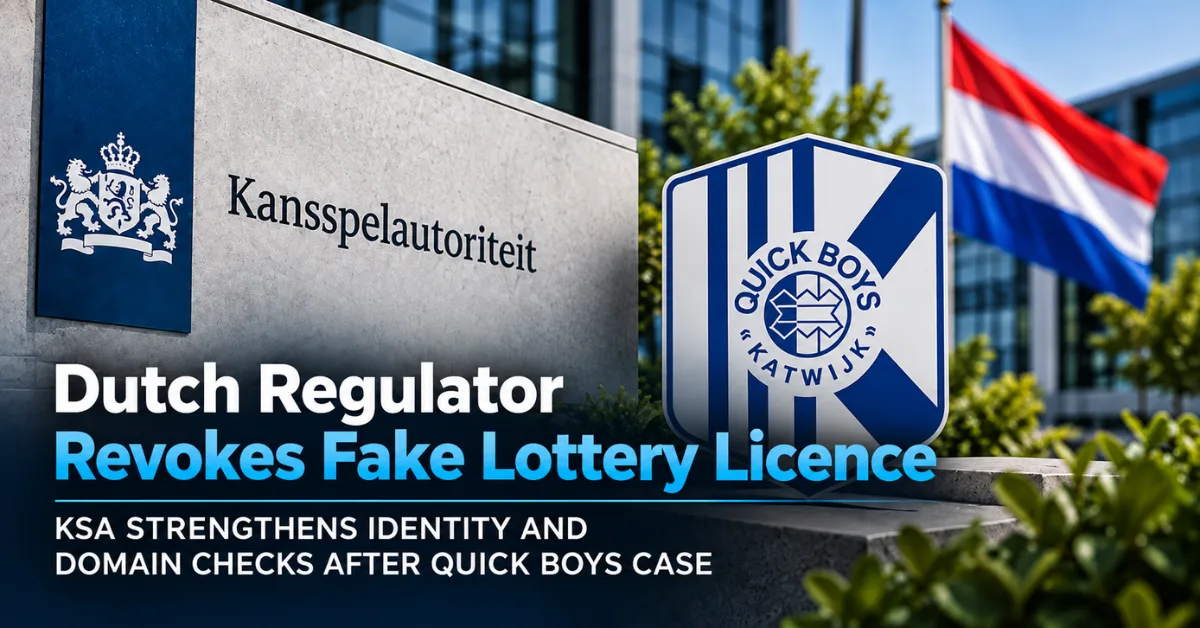
According to the KSA’s official announcement on the fraudulent lottery licence, an unknown applicant posed as the chairman of Quick Boys during the licensing process and successfully obtained a lottery permit in the club’s name.
The permit was subsequently used across several websites offering lottery tickets. The KSA stressed that the websites were not operated by Quick Boys and warned consumers against providing personal or banking information through them.
The case places renewed attention on regulatory identity controls. The Dutch market has already faced concerns over identity verification weaknesses after an investigation found that people registered with Cruks could enter gambling venues using another person’s identification. While the circumstances differ, both cases highlight the importance of robust verification procedures across gambling regulation.
KSA Licensing Director Ella Seijsener said:
Consumers must be able to trust a licence from the KSA.
She added that the regulator had immediately tightened checks on applicant identities and domain names after discovering that its application process had been misled.
KSA Says Fraud Risk Extends Beyond One Case
The regulator said the Quick Boys incident was not an isolated problem. Fraudsters are increasingly attempting to misuse the identities and licences of associations that legally organise lotteries, creating risks for both consumers and legitimate organisations.
The KSA also identified another attempt involving similar fraudulent information, but additional checks prevented a licence from being issued. That broader pattern makes the case more significant than a single fraudulent application and raises compliance questions around how regulators authenticate licence applicants.
The incident comes as the Netherlands continues reviewing different parts of its gambling licensing structure. Recent Dutch lottery licensing decisions involving Lotto BV have also placed licence allocation and regulatory oversight under scrutiny, although the Quick Boys case concerns fraud rather than the legal structure of monopoly permits.
Fraudulent Sites Add to Wider Enforcement Pressure
The use of fake websites also connects the case to broader Dutch efforts to limit unauthorised online gambling activity. Regulators and industry groups have increasingly focused on websites, advertising channels and digital platforms that can give consumers the impression that unlicensed activity is legitimate.
That pressure has extended to major technology companies, with VNLOK taking Meta to court over illegal gambling advertising in a separate case concerning unauthorised gambling promotions on Facebook and Instagram.
For the KSA, the Quick Boys case now shifts the focus towards the licensing process itself. Stronger applicant and domain verification will be central to preventing legitimate-looking permits from being used to give fraudulent gambling websites an appearance of regulatory approval.