
Ace Alliance Horizon & Speed Rome
Sold Out! | November 2, 2026
Event Details
Table Of Content :

Montreal Study Finds Online Gambling Participation Tripled Since 2018

trust
Ace Alliance: Delivering Trust Through Expertise
From exclusive events and interviews to real-time market trends, Ace Alliance brings you unbiased, well-informed, and data-driven content. Our editorial team adheres to strict editorial standards, ensuring that the information you receive is not only relevant but also trustworthy.

Built by market experts hosting events since 2023, with our first event in Riga, Latvia gathering over 300 top level iGaming industry executives, Ace Alliance is able to provide you with reliable information from direct interaction with experts and leaders in the sector.
Altay
Altay Celikkaya
Content Manager
Updated:
Reading Time: 2 minutes

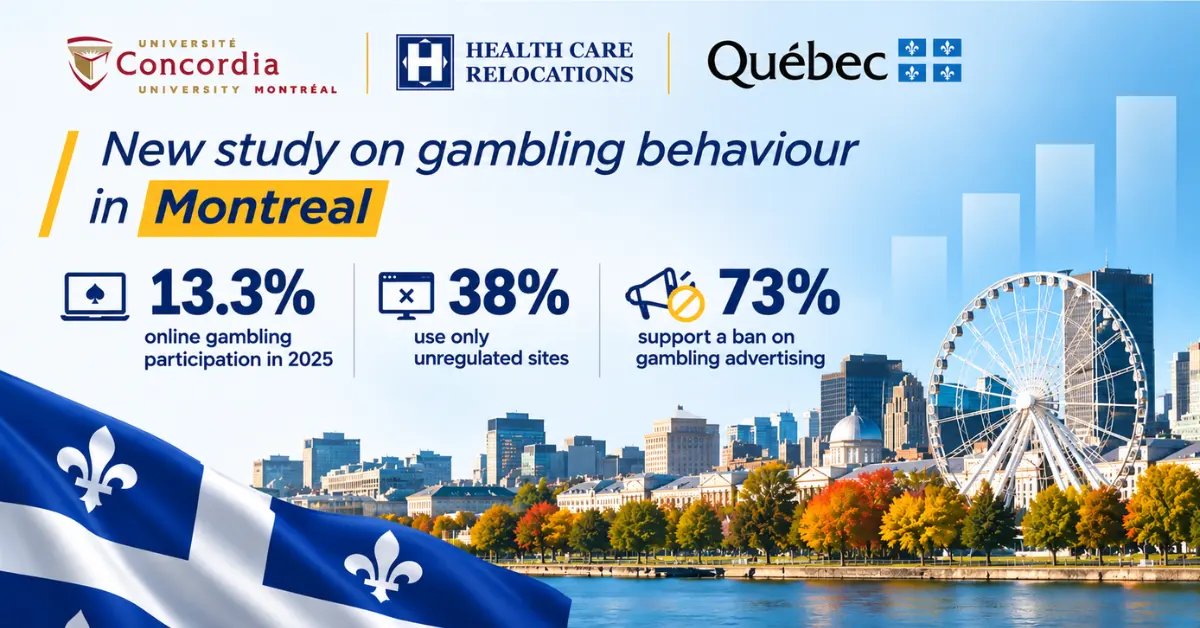
Online gambling participation in Montreal has tripled since 2018, reaching 13.3% of adults in 2025, according to a new public health study published on 5 November 2026. The findings also reveal substantial use of unregulated gambling platforms and growing concerns about advertising and player protection.

Conducted by Montreal’s Regional Public Health Department (DRSP) and Concordia University, the research examined gambling behaviours and associated risks using data from 8,500 adults surveyed during 2025 and 2026.
Vilnius skyline and Lithuanian flag illustrate coalition support for gambling tax reform.

Reports

Key Takeaways From Montreal's Gambling Study

  • Online gambling participation increased from 4.4% in 2018 to 13.3% in 2025.

  • Overall gambling participation declined from 54.5% to approximately 39% over the same period.

  • Excluding online lottery purchases, 38% of online gamblers reported using only unregulated platforms.

  • Around 73% of adults supported banning online gambling advertising.

  • Men aged 18–34 showed greater participation in online casino games, sports betting and poker.

Online Gambling Grows Despite Falling Overall Participation

According to the official Montreal public health report, traditional gambling participation has declined significantly.

Approximately 39% of Montreal adults reported gambling in 2025, compared with 54.5% in 2018 and 74% in 2002.

However, participation through online gambling websites and applications rose from 4.4% in 2018 to 13.3% in 2025.

The increase was particularly evident among men aged 18–34, who were more likely to play online casino games, bet on sports, and play poker.

Concordia University researcher Sylvia Kairouz said:

When you just need to pick up your phone and push a button to gamble, that makes it very difficult to resist.

Researchers also found that 4.6% of people who gambled were classified as being at moderate or high risk of gambling problems.

Unregulated Gambling Platforms Attract Players

The study highlights the continued presence of gambling websites operating outside Quebec’s provincial regulatory framework.

When online lottery purchases were excluded, 38% of online gambling participants reported exclusively using unregulated platforms. Another 16% used both unregulated websites and Loto-Québec services, while 46% used only Loto-Québec.

These figures reflect the researchers’ classification of unregulated platforms rather than individual findings of illegal activity.

The results add context to the ongoing debate over Quebec’s proposed iGaming market liberalisation, which would introduce a commercial licensing framework alongside existing provincial gambling arrangements.

Gambling Advertising Faces Public Opposition

Advertising emerged as another concern, with 73% of surveyed adults supporting a ban on online gambling promotions.

Meanwhile, 70% considered online gambling too accessible, and 60% believed there was excessive advertising.

These findings come as Canada’s gambling industry implements new responsible gambling advertising standards.

For operators and affiliates, the results underline the importance of responsible marketing, audience targeting and player protection.

What the Findings Mean for Canada's iGaming Market

The research provides evidence of changing consumer behaviour in Montreal, although its findings should not be treated as representative of Canada as a whole.

It also reinforces questions about channelisation, particularly where consumers use platforms outside provincial oversight.

Ontario has already taken enforcement action against suppliers serving unregulated gambling websites, illustrating the different regulatory approaches across Canadian provinces.

For B2B stakeholders, Montreal’s findings offer useful evidence for discussions about market regulation, advertising oversight and consumer protection. However, the study does not establish whether expanding commercial licensing would reduce participation in unregulated gambling.