Ace Alliance Horizon & Speed Rome
Sold Out! | November 2, 2026
Event Details
Table Of Content :

New Brunswick Live Casino Bill Passes Second Reading as Regulation Advances

trust
Ace Alliance: Delivering Trust Through Expertise
From exclusive events and interviews to real-time market trends, Ace Alliance brings you unbiased, well-informed, and data-driven content. Our editorial team adheres to strict editorial standards, ensuring that the information you receive is not only relevant but also trustworthy.

Built by market experts hosting events since 2023, with our first event in Riga, Latvia gathering over 300 top level iGaming industry executives, Ace Alliance is able to provide you with reliable information from direct interaction with experts and leaders in the sector.
Altay
Altay Celikkaya
Content Manager
Updated:
Reading Time: 2 minutes

New Brunswick has taken another step towards regulating online live casino games after Bill 8 passed its second reading on 3 November 2026. The proposed amendments to the Gaming Control Act would allow the Canadian province to establish rules for live dealer casino games, although the legislation has not yet become law.

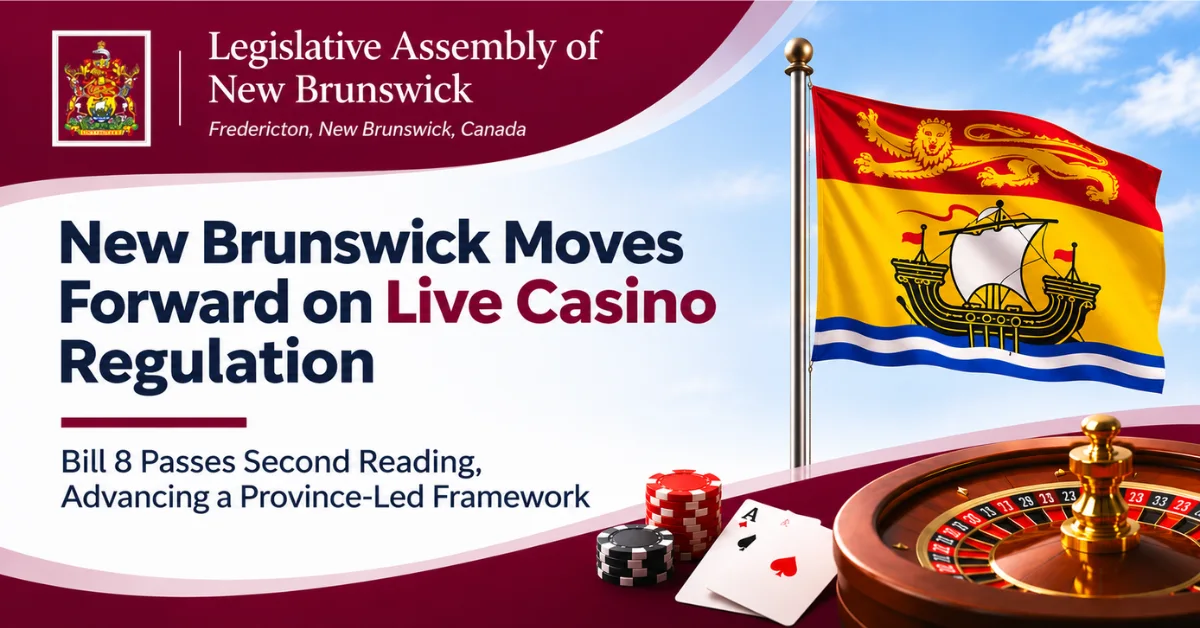
New Brunswick advances Bill 8 on live casino gaming, with roulette, cards and provincial flag.

Regulation & Compliance

Key Takeaways From New Brunswick’s Live Casino Bill

  • Bill 8 passed its second reading on 3 November following its introduction on 27 October.

  • The legislation would establish regulatory authority for online casino games hosted by live dealers.

  • Atlantic Lottery Corporation could expand its digital gaming offering under the proposed framework.

  • The bill maintains a government-controlled model rather than introducing commercial licences for private operators.

  • Further legislative approval and detailed regulations are required before the framework can take effect.

New Brunswick Lawmakers Advance Live Casino Legislation

According to the Legislative Assembly of New Brunswick’s official records, Bill 8 passed its second reading on 3 November after lawmakers resumed debate.

The government introduced the legislation on 27 October to modernise gambling rules and address online live casino products that existing legislation does not specifically cover.

The proposed amendments define live casino games as online casino activities hosted, facilitated or presented by a live person.

They would also allow an authorised provincial government agency to operate online casino services, subject to government approval.

Government-Controlled Model Remains Central

The changes follow a proposal from Atlantic Lottery Corporation, which provides regulated online gambling services across Canada’s Atlantic provinces.

New Brunswick’s government confirmed that the existing Gaming Control Act does not provide sufficient authority to establish dedicated live casino regulations.

Finance and Treasury Board Minister René Legacy said:

Modernising the Gaming Control Act is about keeping up with how gaming is changing.

The government has indicated that further regulations would address safeguards and oversight. However, detailed technical and operational requirements have not yet been published.

Unlike Alberta’s regulated iGaming market, New Brunswick’s proposal does not establish an open commercial licensing system for independent online casino operators.

New Brunswick’s existing online casino market remains centred on Atlantic Lottery Corporation, with offshore platforms operating outside provincial oversight.

What Comes Next for Casino Operators and Suppliers?

Bill 8 must complete the remaining legislative stages before becoming law. Its provisions would subsequently take effect on dates established by proclamation.

For live casino studios and technology providers, the framework could create opportunities to supply products and infrastructure to authorised provincial operations. However, the bill does not establish a separate supplier licensing process.

The approach also contrasts with Alberta’s enforcement strategy against unlicensed gambling, which focuses on operators outside its competitive market.

Meanwhile, Canada’s wider debate over provincial gambling authority continues to highlight differences between regulatory models.

For now, the 3 November vote represents legislative progress rather than approval to launch live casino services.