Ace Alliance Horizon & Speed Rome
Early Bird Passes Available! | November 2, 2026
Get Your Pass!
Table Of Content :

Ninth Circuit Backs Nevada’s Authority Over Sports Prediction Markets

trust
Ace Alliance: Delivering Trust Through Expertise
From exclusive events and interviews to real-time market trends, Ace Alliance brings you unbiased, well-informed, and data-driven content. Our editorial team adheres to strict editorial standards, ensuring that the information you receive is not only relevant but also trustworthy.

Built by market experts hosting events since 2023, with our first event in Riga, Latvia gathering over 300 top level iGaming industry executives, Ace Alliance is able to provide you with reliable information from direct interaction with experts and leaders in the sector.
Altay
Altay Celikkaya
Content Manager
Updated:
Reading Time: 3 minutes

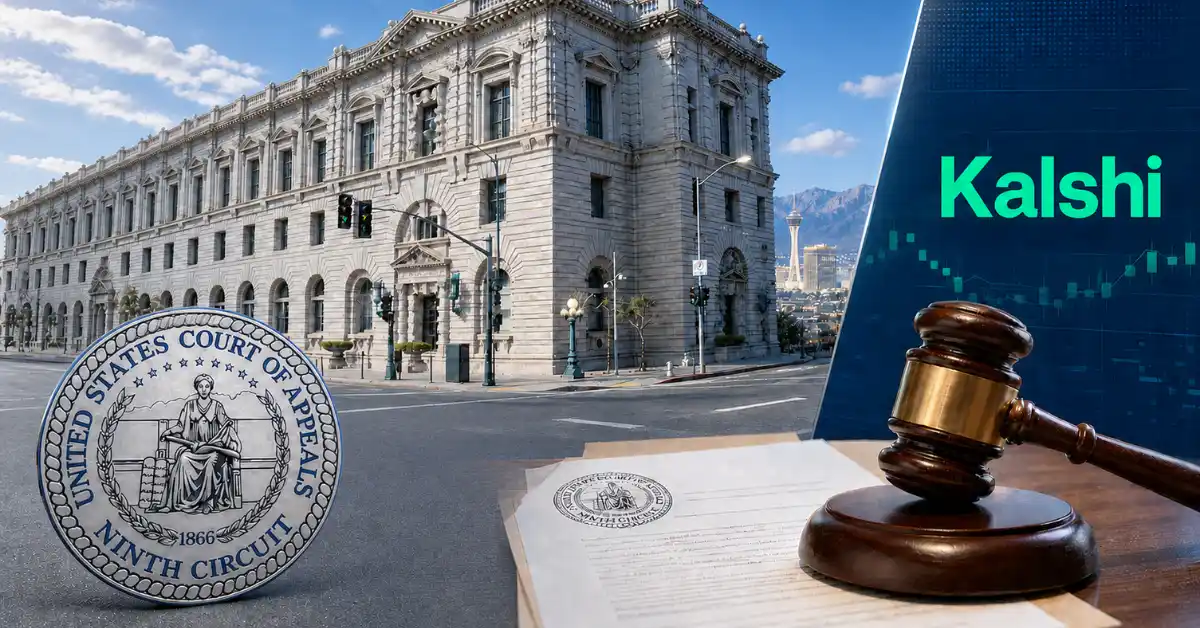
The Ninth US Circuit Court of Appeals has allowed Nevada to enforce its gaming laws against Kalshi’s sports-event contracts, rejecting the operator’s federal pre-emption claim. The unanimous ruling upheld the removal of an injunction that had blocked state enforcement.

In its 50-page opinion, the panel said Kalshi had not shown that the Commodity Exchange Act pre-empts Nevada law. The decision conflicts with the Third Circuit’s position but neither creates a nationwide ban nor resolves every event contract.

Ninth Circuit courthouse seal and gavel beside Kalshi branding illustrating Nevada’s sports contracts ruling

Regulation & Compliance

Key Takeaways From the Ninth Circuit’s Kalshi Ruling

  • Nevada may enforce its gaming laws against Kalshi’s sports-event contracts because the panel found they were not swaps protected by federal preemption.

  • The judgment does not create a nationwide ban and leaves Nevada’s challenge to election-event contracts for the district court to examine.

  • The Ninth Circuit has departed from the Third Circuit’s treatment of similar products, deepening uncertainty for nationally operated platforms.

  • Operators should expect state licensing, geolocation and product-availability controls to become more important while further appeals remain possible.

Why the Panel Rejected Kalshi’s Swap Argument

Kalshi is registered with the Commodity Futures Trading Commission as a designated contract market. It argued that its sports-event contracts were swaps under the Commodity Exchange Act and therefore subject to the CFTC’s exclusive jurisdiction, preventing Nevada from applying its gambling rules.

The Ninth Circuit rejected that reading. It held that sports bets did not become swaps merely because they were traded on a federally regulated market. In the panel’s view, the outcome of an ordinary sporting event was not associated with a potential financial, economic or commercial consequence in the way required by the statutory definition of a swap.

The court also relied on the existing CFTC regulation that bars contracts involving gaming. It rejected Kalshi’s express, conflict and field preemption theories, finding that federal derivatives oversight and Nevada’s regulation of wagering could operate without an unavoidable legal conflict.

That interpretation, the panel noted, would displace a multibillion-dollar field historically supervised by state and tribal authorities without congressional direction.
The opinion states that more than 90% of Kalshi’s trades in 2025, representing 95% of its revenue, were sports-related.

A Federal Appellate Split Raises the Stakes

The decision places the Ninth Circuit in direct tension with the Third Circuit, which affirmed preliminary relief for Kalshi in its New Jersey dispute and treated comparable sports contracts as federally protected swaps. The Ninth Circuit expressly declined to follow that broader interpretation.

The disagreement matters well beyond the two cases. Platforms offering one product can now face materially different legal treatment depending on the state and appellate circuit. District courts have already reached varied results, while another appeal remains pending in the Fourth Circuit. The split increases the prospect of further appellate review.

The Nevada ruling also follows an August decision in which a Utah court upheld state gambling laws against Kalshi, rejecting similar federal preemption arguments. For operators, the expanding body of conflicting judgments makes a single nationwide compliance assumption increasingly difficult to defend.

Nevada Licensing and Enforcement Return to the Foreground

The Nevada Gaming Control Board said the 3-0 ruling confirmed that sports-event contracts constitute gambling and must comply with the state’s licensing framework. Nevada classifies the offering of such contracts as wagering activity and maintains that entities providing them must hold a state gaming licence.

The appellate judgment follows an earlier Nevada decision that kept Kalshi blocked in parallel state proceedings. The regulatory direction now places greater pressure on prediction-market operators to review state-specific licensing exposure, geolocation controls, marketing language, consumer safeguards and the availability of individual contract types.

For B2B suppliers, the implications extend to payments, identity verification, data feeds, affiliate campaigns and technology contracts. Commercial agreements may need clearer provisions covering restricted jurisdictions, regulatory change and the withdrawal of products following enforcement action.

CFTC Rulemaking Could Shape the Next Phase

The judgment applies the statute and CFTC regulation currently in force. Meanwhile, the CFTC’s proposed prediction-market framework seeks to clarify how gaming and sports contracts should be treated at the federal level.

Any final rule could influence future litigation, but it would not automatically erase the Ninth Circuit’s reasoning or Nevada’s present enforcement authority. Businesses should therefore map compliance by contract type, state and appellate circuit rather than treating CFTC registration as a complete substitute for state gaming analysis. Election contracts require separate attention because the Ninth Circuit remanded that part of Nevada’s challenge to the district court.