Home News Premier League Gambling Shirt Ban Cuts Advertising Exposure by Just 10.5%, Study Finds
Premier League Gambling Shirt Ban Cuts Advertising Exposure by Just 10.5%, Study Finds
Pitchside Advertising Dominates Gambling Brand Exposure
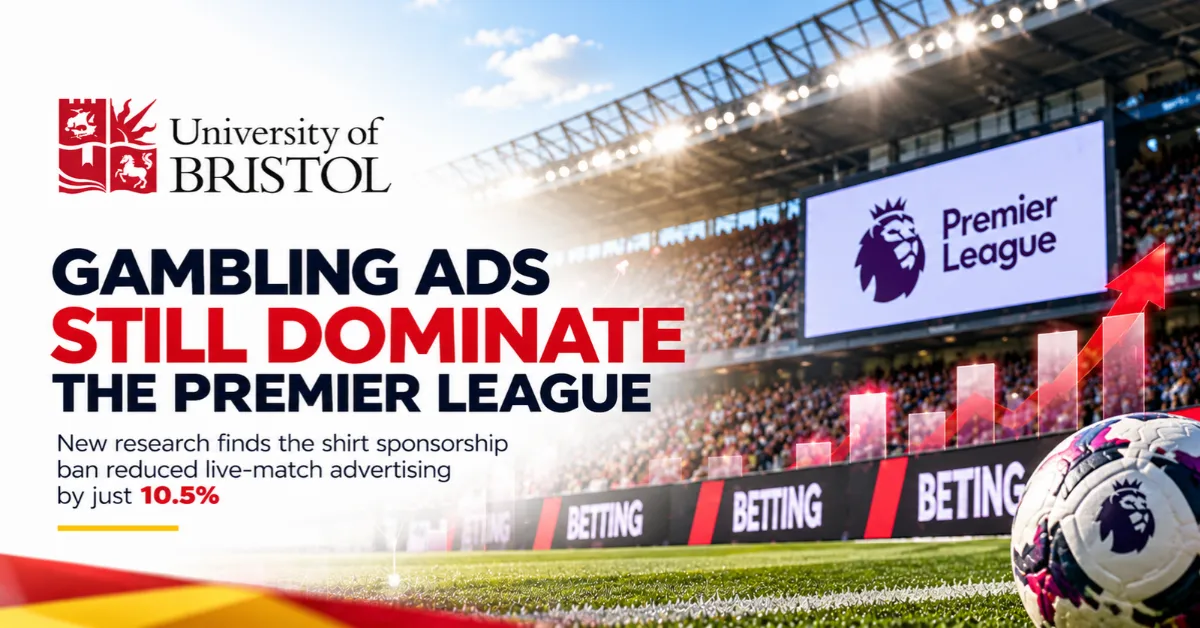
According to research published by the University of Bristol, researchers monitored seven live Premier League broadcasts between 21 and 24 August 2026. The analysis also covered 15 hours of Sky Sports News and TalkSport programming, along with social media advertising from ten major gambling brands. Live matches alone contained 11,205 gambling messages, with advertising visible for five hours and 16 minutes.
The Newcastle United versus Liverpool match recorded the highest exposure, with 2,702 messages and gambling marketing visible during approximately 41% of the broadcast. Pitchside advertising remained the largest source of exposure, accounting for 72% of messages during live matches.
These findings provide a post-restriction comparison to earlier research into gambling branding in Premier League highlights, which also identified pitchside displays as a major advertising channel.
Gambling Branding Shifts to Sleeves and Training Kits
The Premier League’s voluntary restriction removed gambling sponsorship from the front of matchday shirts at the beginning of the 2026–27 season.
However, researchers found that sleeve and training-kit branding increased by about 362% compared with previous years.
The study estimated that removing front-of-shirt sponsorship reduced live-match gambling messages by only 10.5%.
Project lead Dr Raffaello Rossi said:
The front-of-shirt ban was effective in removing gambling logos from shirt fronts, but it did not remove them from football.
The findings suggest that gambling advertising has partly shifted towards placements unaffected by the restriction.
This follows earlier concerns about the sponsorship ban’s commercial impact on Premier League clubs, including the financial implications of replacing betting partnerships.
The study also examined gambling advertising on Facebook and Instagram. Researchers identified 1,023 paid advertisements with an estimated combined UK reach of 153.2 million account exposures. Accounts belonging to users aged 18–24 represented 16.6 million instances of that estimated reach.
Separately, researchers found that 93% of the gambling content marketing examined was not clearly identifiable as advertising. The findings add evidence to ongoing debates over stronger UK gambling advertising restrictions.
Researchers recommended broader restrictions covering pitchside advertising, sponsorship and digital marketing.
For gambling operators, affiliates and football clubs, the study highlights growing scrutiny of advertising placements that remain permitted under the current voluntary framework. Its findings do not establish that further restrictions have been adopted.