Ace Alliance Horizon & Speed Rome
Early Bird Passes Available! | November 2, 2026
Get Your Pass!
Table Of Content :

Türkiye Investigates 177 Suspects Over TL17.75bn in Illegal-Betting Transactions

trust
Ace Alliance: Delivering Trust Through Expertise
From exclusive events and interviews to real-time market trends, Ace Alliance brings you unbiased, well-informed, and data-driven content. Our editorial team adheres to strict editorial standards, ensuring that the information you receive is not only relevant but also trustworthy.

Built by market experts hosting events since 2023, with our first event in Riga, Latvia gathering over 300 top level iGaming industry executives, Ace Alliance is able to provide you with reliable information from direct interaction with experts and leaders in the sector.
Altay
Altay Celikkaya
Content Manager
Updated:
Reading Time: 3 minutes

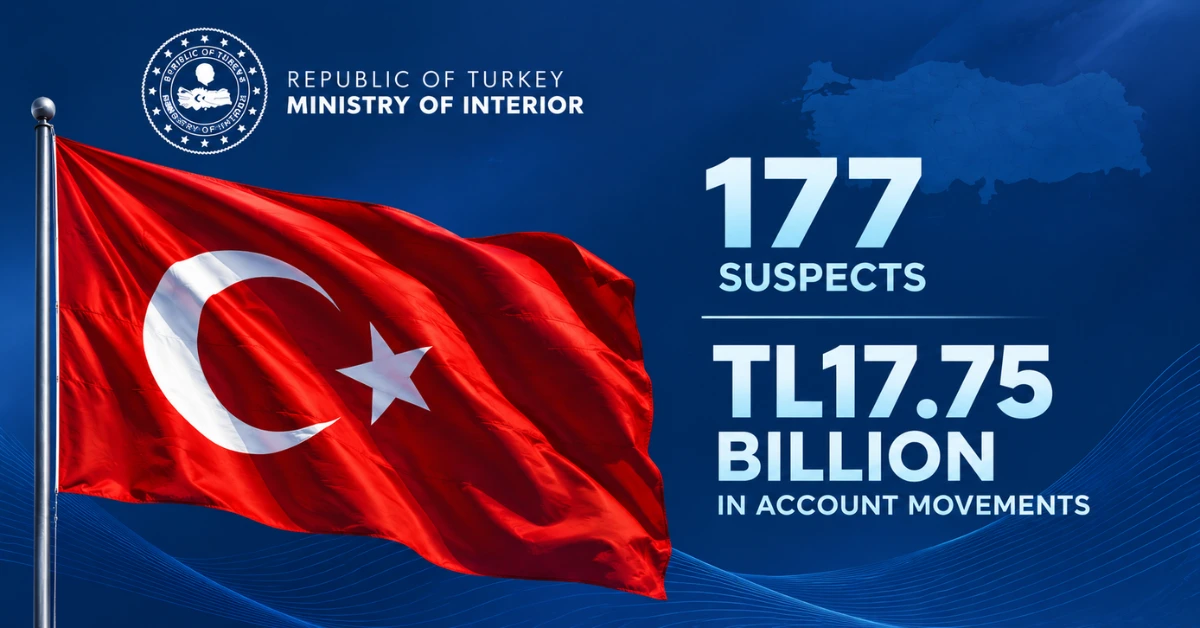
Turkish authorities have launched proceedings against 177 suspects after identifying TL17.75 billion in account movements linked to alleged illegal betting and payment activity. The Turkish Interior Ministry said the operation covered eight provinces and involved multiple enforcement bodies. Authorities stressed that the TL17.75 billion figure refers to account movements under investigation, not confirmed betting turnover or seized assets.

Turkish flag beside the Republic of Turkey Ministry of Interior logo, highlighting 177 suspects and TL17.75 billion in account movements linked to an illegal betting investigation.

Regulation & Compliance

Key Takeaways From Türkiye’s Illegal-Betting Operation

  • Authorities initiated proceedings against 177 suspects following operations across eight Turkish provinces.

  • Investigators identified TL17.75 billion in account movements associated with the suspects under investigation.

  • The allegations include operating illegal betting through websites and facilitating unauthorised financial transfers.

  • Authorities also suspect that proceeds generated through illegal betting were moved into the financial system using different methods.

  • The operation involved the Gendarmerie General Command, cybercrime and organised-crime units, MASAK and public prosecutors.

  • The action adds to Türkiye’s wider enforcement push against the financial infrastructure supporting unlicensed gambling.

Eight Provinces Targeted in Coordinated Enforcement Action

The operation involved the Gendarmerie General Command’s Anti-Smuggling and Organised Crime Department and Cybercrime Department, working alongside Türkiye’s Financial Crimes Investigation Board, known as MASAK, and public prosecutors. Provincial gendarmerie commands in the eight affected jurisdictions carried out the operational stage of the investigation.

According to the Interior Ministry, suspects were identified as allegedly using websites to offer illegal betting and facilitating financial transfers linked to those activities. Investigators also found indications that proceeds generated through illegal betting were being introduced into the financial system through various methods.

The ministry said:

We will continue our fight against cybercrime with determination so that no crime or criminal disturbing the peace of our citizens goes unpunished.

The involvement of MASAK gives the case a financial-crime dimension beyond the operation of unlicensed betting websites alone. Tracing payment flows, intermediary accounts and methods used to move suspected proceeds has become an increasingly important part of enforcement against illegal online gambling.

That financial focus also aligns with FATF’s new gambling financial-crime risk indicators, published in September. FATF’s work highlighted vulnerabilities involving illegal gambling, payment structures and methods that can obscure the movement or ownership of funds.

Türkiye Intensifies Pressure on Illegal Gambling Networks

The latest investigation follows a broader tightening of Türkiye’s approach to unlicensed gambling in 2026.

Earlier this year, the government outlined plans to strengthen sanctions and expand enforcement against illegal betting as part of Türkiye’s broader crackdown on illegal gambling. The strategy has increasingly focused not only on gambling operators but also on payment infrastructure and financial channels that may support offshore or unauthorised platforms.

MASAK has consequently become central to this enforcement model. Financial intelligence can help authorities identify accounts that receive or redistribute betting-related payments, follow transactions between intermediaries and investigate whether suspected proceeds are being integrated into legitimate financial channels.

For operators, suppliers, affiliates and payment businesses, the approach demonstrates how illegal-gambling enforcement is becoming increasingly connected to financial-crime controls. Exposure can extend beyond the website offering bets to businesses or individuals suspected of enabling payments and moving related funds.

Financial Networks Become Central to Gambling Enforcement

Türkiye’s investigation also reflects a wider enforcement trend in which authorities are concentrating on the financial infrastructure behind unlicensed gambling.

In Germany, authorities recently conducted raids connected to a suspected €5.86 billion illegal gambling network. That investigation involved searches across multiple properties following a lengthy investigation into suspected unauthorised gambling activity and associated financial structures.

The cases are separate and involve different legal systems, but both demonstrate why enforcement agencies increasingly view payment flows as a key route into complex online gambling networks.

Digital betting platforms can operate across borders while relying on bank accounts, payment intermediaries and other financial mechanisms to receive and distribute money. For enforcement bodies, examining those transactions can provide evidence of relationships that may be less visible from gambling websites alone.

Türkiye’s latest action therefore carries significance beyond the headline TL17.75 billion figure. The amount should not be interpreted automatically as gambling turnover or seized criminal proceeds. Instead, it demonstrates the scale of financial activity being examined as authorities investigate the alleged network.

For the B2B gambling sector, the operation reinforces the growing importance of payment monitoring, anti-money laundering controls and exposure to unlicensed-market activity. As regulators and law-enforcement agencies increase cooperation with financial-intelligence bodies, businesses connected to gambling payments face greater scrutiny over where funds originate, how they move and which markets they ultimately serve.