Our Managing Director at Ace Alliance, Faruk Aydin, sat down with Igor Samtsevich, Chief Product Officer at Belatra Games, to explore how the company evolved from land-based roots into a modern online powerhouse. This interview covers product strategy, innovation, and what’s next for Belatra.
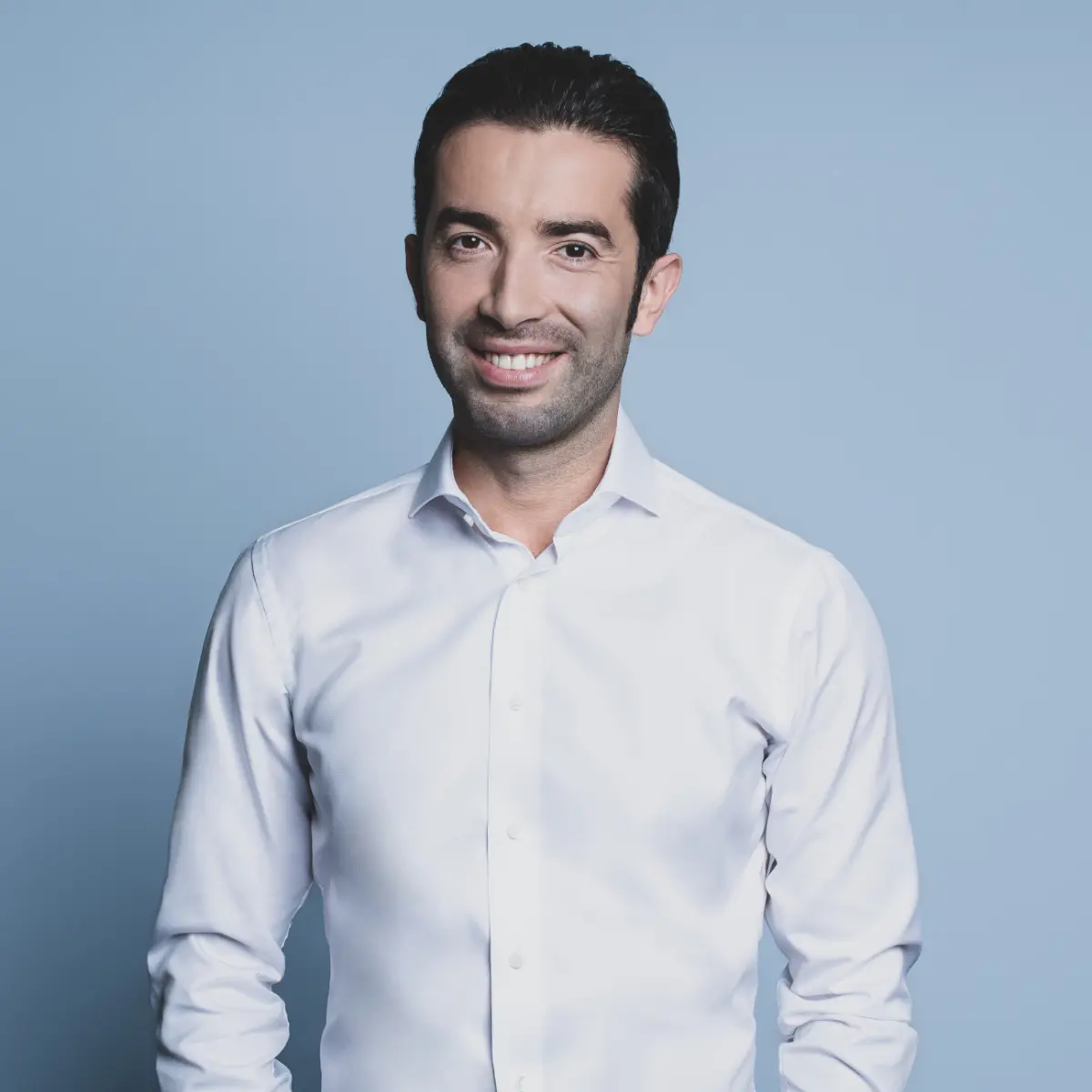 Faruk Aydin :
Belatra Games recently celebrated its 33rd anniversary this April. How does a company with such a long history in land-based “wooden cabinet” hardware maintain the agility of a modern, online-first software developer?
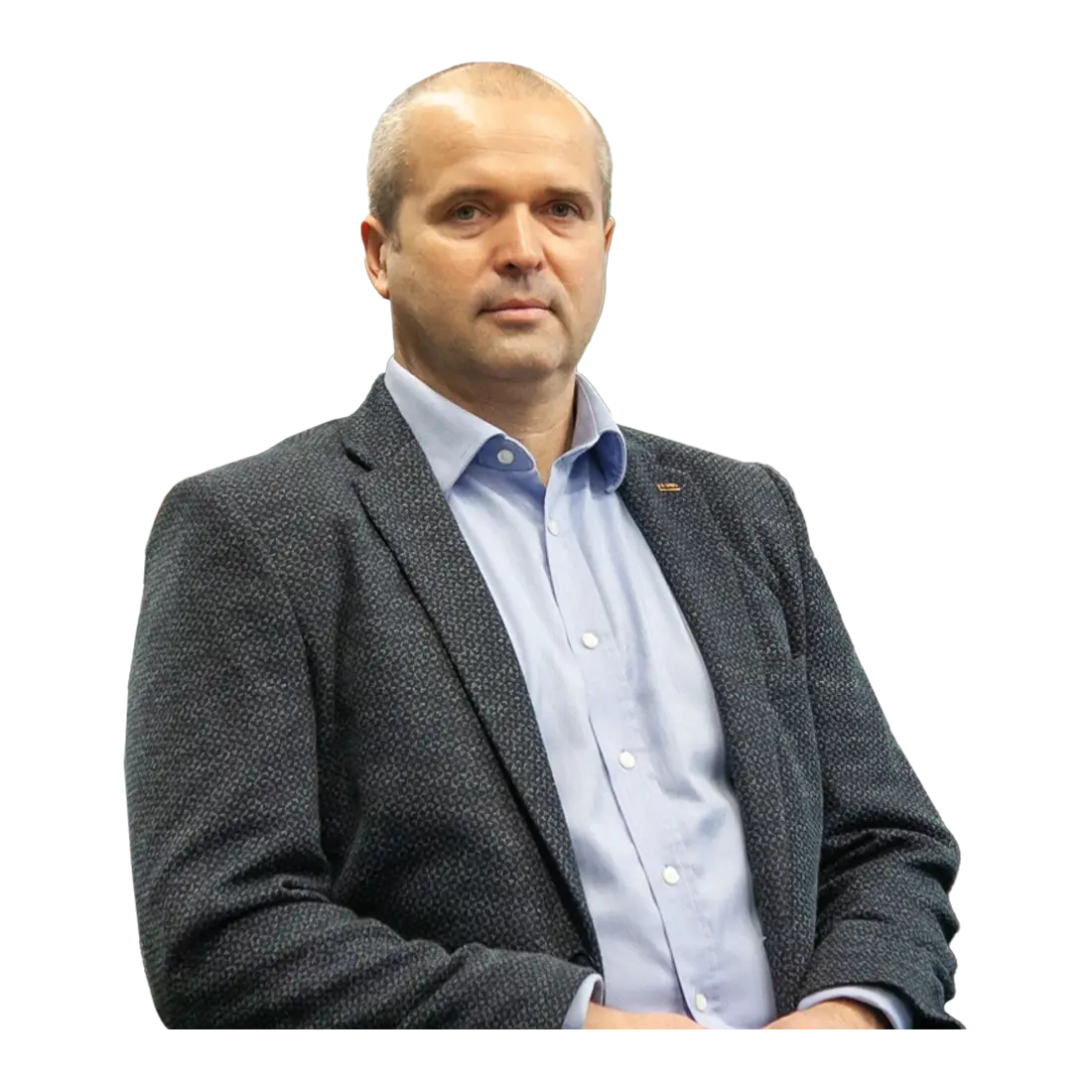 Igor Samtsevich :
Celebrating our 33rd anniversary this April gave us a chance to reflect on how our technical foundation has evolved. Since 1993, we have focused on the land-based sector, which required a very disciplined approach to hardware and software integration. This period was essential for us; it allowed us to build a deep understanding of game mathematics and player psychology. When the industry began its shift toward online platforms, we didn’t see it as a disruption, but rather as an opportunity to apply our existing database of mechanics to a more flexible environment.
Our transition started with the strategic adaptation of our most successful land-based titles. This allowed us to analyze how classic gameplay performs in a digital ecosystem and identify exactly what online players expect. By combining this historical data with modern web technologies, we moved from simple porting to developing original online-first content. This “hybrid” experience is what keeps us agile—we have the technical infrastructure to follow current trends quickly, but every new project is backed by decades of tested research.
Today, our development process is driven by a balance of innovation and experience. We actively monitor market shifts and player demands, yet we avoid chasing every short-lived trend. Instead, we use our accumulated knowledge to implement features that offer real value. For us, being a modern developer doesn’t mean forgetting the past; it means using three decades of expertise to build more reliable and engaging products for the digital age.
Faruk Aydin :
You maintain a strict “everything in-house” philosophy, from math modeling to sound design. In an era of outsourcing and specialized studios, what is the biggest competitive advantage this total control gives you?
Igor Samtsevich :
The decision to keep all development processes in-house is a deliberate strategic choice. In a market saturated with outsourced content, the most significant advantage of this approach is the preservation of our unique identity. Despite each game being a distinct project, they all carry a specific “Belatra signature” that players recognize instantly. When math modeling, visual art, and sound design are handled by the same internal teams over many years, it creates a level of stylistic consistency that is very difficult to replicate through third-party partners.
Beyond the creative identity, this philosophy significantly enhances our operational efficiency. Having all key specialists—from mathematicians to sound engineers—working under one roof allows for seamless communication. We can iterate much faster because the feedback loop is direct. If a game’s mechanic needs a slight adjustment to better align with the audio-visual feedback, we can implement that change immediately without the logistical delays inherent in outsourcing.
Ultimately, total control over the production cycle ensures a higher level of product integrity. We aren’t just assembling components; we are building a cohesive experience where every element is designed to complement the others. This end-to-end oversight allows us to maintain strict quality standards and ensures that every release fully aligns with our long-term vision and technical requirements. This synergy is exactly what differentiates us in a highly competitive digital landscape.
Faruk Aydin :
The “Mummyverse” has grown from a single slot into a massive, multi-layered ecosystem: we see instant games, classic 3-reel versions, and even exclusive custom titles tailored for specific partners. With such a vast and diverse universe already in place, how do you navigate your roadmap? What criteria determine which genre, mechanic, or partner-specific “twist” the Mummy should conquer next?
Igor Samtsevich :
Managing the “Mummyverse” roadmap is really about striking the right balance. Even though player interests are constantly shifting, we are well aware that slots still drive the majority of the market. They offer the technical depth we need to actually develop a character and a story. For us, the Mummy isn’t just a skin; it’s a protagonist with a narrative, and the slot format remains the most effective way to showcase that.
However, our approach is not static. We actively integrate the Mummy IP into emerging genres that are currently peaking in popularity, such as instant games. This allows us to expand the universe and reach different player demographics without oversaturating our core offering. The criteria for choosing the next “twist” depend on this equilibrium: we want to provide the high-quality, story-rich experience that slot fans expect, while simultaneously experimenting with faster, trend-driven mechanics to keep the brand modern.
As for custom projects and exclusives, we stay flexible. We have our main global releases, but we also work on specialized versions when a partner has a specific regional need. We make sure to space these out, though. In between these projects, we focus on entirely different themes and styles to keep our portfolio diverse. This prevents the brand from feeling repetitive and ensures that every new game featuring the Mummy actually brings something new to the table.
Faruk Aydin :
Mummyland Treasures moved away from traditional reels to a 7×7 grid. What were the biggest mathematical or technical challenges in balancing over 800,000 ways to win while keeping the game volatile and exciting?
Igor Samtsevich :
Moving from traditional reels to a 7×7 grid was a major step for us. In a standard slot, it’s easy to see why you won, but with such a massive grid, there’s a risk that the player might feel overwhelmed or that the wins will feel too small and frequent. Our main task was to find a balance where the gameplay remains clear and every spin still carries that sense of high-stakes excitement.
We had to work hard to ensure that even with so many winning combinations, the potential for a significant payout remained high. It’s not just about the numbers; it’s about the rhythm of the game. We wanted to make sure that the cascades and the expanding grid felt like a natural progression, keeping the player engaged without making the experience too chaotic.
On the technical side, our focus was simply on smoothness. We wanted to ensure that this complex system worked perfectly on any device, whether someone is playing on a desktop or a smartphone. In the end, it was about taking a very complex mathematical concept and turning it into something that feels intuitive, fun, and unpredictable for the player.
Faruk Aydin :
The sequel, Mummy 2, is highly anticipated. What can players expect in this next chapter compared to the original?
Igor Samtsevich :
As much as we would like to share every detail, we prefer to keep some surprises for the official release. However, we can certainly pull back the curtain a little. Mummy 2 is a true sequel in every sense—we are significantly expanding the narrative and the universe we’ve built. The most exciting update is the introduction of new characters, including a “Mummy Lady” who will play a central role in the story. Adding her allowed us to bring a new dynamic to the gameplay and broaden the overall theme of the series.
Beyond the story, players should expect a shift in the game’s core mechanics. While we are staying true to the atmosphere that made the original a hit, we aren’t just repeating the same formula. We have developed several entirely new features that haven’t appeared in any of the previous versions. Our math and design teams have focused on creating a different kind of rhythm for this sequel, incorporating fresh mechanics that make the experience feel both familiar and completely new at the same time.
Essentially, Mummy 2 is about evolution. We’ve taken the feedback from our community and the data from the first game to refine the experience. We are raising the bar in terms of visual quality and feature complexity, ensuring that this next chapter offers more depth and more unexpected moments than the original.
Faruk Aydin :
Fast-paced instant and crash games are a growing focus for Belatra. How does your approach to mathematical modeling change when designing a crash game compared to a high-volatility slot like Blast the Bass?
Igor Samtsevich :
The main difference between a slot like Blast the Bass and a crash game is how the player experiences the risk. In a traditional slot, you press a button and wait for the Random Number Generator to show you the result. It’s all about the excitement of the reveal. But in a crash game, the randomness is happening in real-time right in front of you. The multiplier keeps climbing, and the math has to support a game where you aren’t just a spectator, but the person in control of when to stop.
For our team, this means we have to build the game’s tension differently. In a slot, we focus on the symbols and the big win potential of a single spin. In a crash game, we are managing the “pressure.” We have to make sure that the climb feels fair and unpredictable every single second. It’s a more psychological type of game because the player is constantly asking themselves, “Should I stay or should I go?”
Even though both types of games are strictly based on chance and certified random logic, the “vibe” is completely different. Designing a crash game is about creating that fast-paced, interactive moment where everyone is watching the same curve and making their own split-second decisions. It’s less about the math of symbols and more about the math of timing and intuition.
Faruk Aydin :
The “11+ free spins” superstition has become part of player lore in the Mummyverse. As a product leader, how much do you pay attention to “player myths,” and do you ever intentionally design features to lean into those psychological triggers?
Igor Samtsevich :
We closely follow player lore, and the “11+ free spins” superstition is a perfect example of how a game takes on a life of its own. It’s especially visible during live streams; when a streamer hits that magic number, you can see the chat instantly explode with excitement. As developers, we find this fascinating because it shows that our community is looking for patterns and building their own emotional narrative around the mechanics.
In reality, of course, every single outcome is strictly determined by the Random Number Generator (RNG). Having 11 or more spins doesn’t actually guarantee a massive payout, just as we often see spectacular wins on a standard round of other number of spins. The math remains fair and random regardless of the number on the screen. However, we don’t try to “debunk” these superstitions. On the contrary, we pay close attention to them because they represent a psychological trigger that makes the game more exciting for the player.
We don’t change the underlying logic to fit these superstitions, but we do pay attention to them when designing the game’s atmosphere. If we know a certain moment creates a peak in excitement for streamers and their viewers, we want the visuals and sound to reflect that energy. It’s about leaning into the community’s enthusiasm and making sure that when those “lucky” 11 spins appear, the game feels as epic as the players imagine it to be.
Faruk Aydin :
Belatra is celebrated for its ‘hand-crafted’ approach to graphics and sound design. However, we are now in an era where AI can generate game assets in a matter of hours. As CPO, how do you view the integration of neural networks within your ‘artisan’ philosophy? Is there a way to embrace these tools without compromising the soul and ‘craft’ brand of the company?
Igor Samtsevich :
As we have discussed throughout this interview, everything at Belatra comes down to balance. Our philosophy has always been about a “hand-crafted” approach, and the rise of AI doesn’t change that core value; it simply adds a new tool to our kit. In our view, a neural network is an excellent assistant, but it can never replace human intelligence or the “soul” of a project. The real magic happens only in a well-coordinated collaboration between technology and a specialist.
We use AI to handle routine, time-consuming tasks, which actually frees up our team to focus more on the creative and artistic side of development. Sometimes, a neural network can suggest an unexpected angle or an idea that we hadn’t considered, giving us a fresh perspective that we can then refine and turn into something truly professional. However, we are very careful never to copy AI-generated content blindly. We believe that without a human eye to control, check, and add that final “artisan” touch, a product will always feel hollow.
For us, maintaining our brand’s “craft” identity in the age of AI means staying in the driver’s seat. We embrace these tools because they speed up our processes and help us iterate faster, but the final decision-making always rests with our people. You can generate an asset in hours, but you can’t generate 33 years of intuition and understanding of what players truly love. At the end of the day, a person is at the center of everything we build, and that is a principle we will never compromise.
Faruk Aydin :
Belatra creates exclusive game versions for top-tier operators. How do you ensure these “tailor-made” titles maintain the core Belatra identity while meeting the specific branding needs of a partner?
Igor Samtsevich :
Creating exclusive versions for our partners is a process that benefits everyone involved—the operator, the players, and us as developers. For Belatra, it’s a unique creative challenge. People often think that adapting an existing game is easier than building one from scratch, but in reality, it’s often more complex. You have to carefully deconstruct a successful title and reassemble it so that it meets a partner’s specific branding requirements without losing the original “soul” that made the game a hit in the first place. For the casino, the advantage is clear: they get a unique product that they can call their own, which helps them stand out in a crowded market. But because the game is based on a title players already know and trust, the operator isn’t taking a risk on an unproven mechanic. It’s the perfect middle ground between innovation and familiarity. For the players, it adds a layer of personal connection. If someone has a favorite casino and a favorite Belatra slot, seeing a custom collaboration between the two makes the experience feel more exclusive and tailored specifically to them. It builds a deeper level of engagement and loyalty.
We ensure our core identity remains intact by keeping the fundamental “feel” of the game—the math, the rhythm, and the quality of the interactions—consistent with our standards. We might change the visual wrapping or add specific partner elements, but the engine is always recognizably Belatra. It’s that balance again: we are flexible enough to meet a partner’s needs, but disciplined enough to ensure that every exclusive release still carries our signature of reliability and fun.
Faruk Aydin :
Looking at the iGaming space in 2026, what is one emerging player trend that you are currently preparing the Belatra product team for?
Igor Samtsevich :
In 2026, we are closely watching how the very definition of a “popular game” is changing. One of the most significant trends we’re preparing for is the continued rise of the crash game format. In fact, there is a strong possibility that crash games will eventually rival traditional slots in terms of global popularity. We see this as a natural evolution of the industry, and we are certainly planning to expand our presence in this direction. We want to bring our own unique approach to this genre, exploring how it can coexist with the more traditional gaming experiences our players expect.
At the same time, we believe in the trend of “familiar comfort.” While the industry is always chasing the next big thing, players often find themselves returning to the characters and themes they truly enjoy. For us, this means not just creating new content, but carefully expanding the “universes” we’ve already built. A good example is the direction we are taking with Blast the Bass. We see a lot of potential in further developing that character and that specific world. It’s about giving the players more of what they love, but in a way that feels fresh and evolving.
Ultimately, our strategy is to stay ahead of these shifts by being flexible. Whether it’s moving into new, faster formats or breathing new life into our established hits, we are focused on that same sense of balance. We want to make sure that as the market changes, the Belatra experience remains both modern and reassuringly familiar.
Faruk Aydin :
Beyond the Mummyverse, which of your recent original titles—such as Long Neck Fortune or Voodoo Coins—do you believe has the potential to become the next “flagship” universe for the company?
Igor Samtsevich :
As I mentioned earlier regarding the trend of “familiar comfort,” we are actively focused on developing universes that players already know and love. While the “Mummyverse” is a self-sufficient powerhouse that has stayed popular for years, we are excited to see the emergence of a new flagship character. Our game Blast the Bass, which was released about a year ago, has rapidly grown into a major success. It became clear very quickly that players connected with the character and the vibe of the game, so we decided to expand this into a new series.
We have already taken our fisherman on a new adventure in Ice Bass, exploring a different setting while keeping the core excitement alive. This “universe” is just beginning to grow. Looking ahead, we plan to continue this journey very soon—our fisherman is about to pick up a new hobby, which will bring a completely fresh twist to the gameplay.
It’s an interesting strategic position for us. We aren’t looking for a “competitor” to the Mummy; instead, we are building a diverse portfolio of legends. The Mummy remains our iconic classic, but the “Blast the Bass” series is proving that we can create new, modern heroes that players love just as much. This is exactly how we plan to evolve: by supporting our long-standing hits while consistently developing new universes that have the potential to become the next big chapter in Belatra’s history.
Over to You: A big thank you to Igor Samtsevich for sharing his perspective on the evolution of game development and product strategy at Belatra Games. His insights highlight how experience, innovation, and balance continue to shape one of the industry’s most distinctive providers.
Stay tuned for more expert conversations in our Ace Alliance interviews section, where we continue to explore the people and ideas driving the industry forward.



