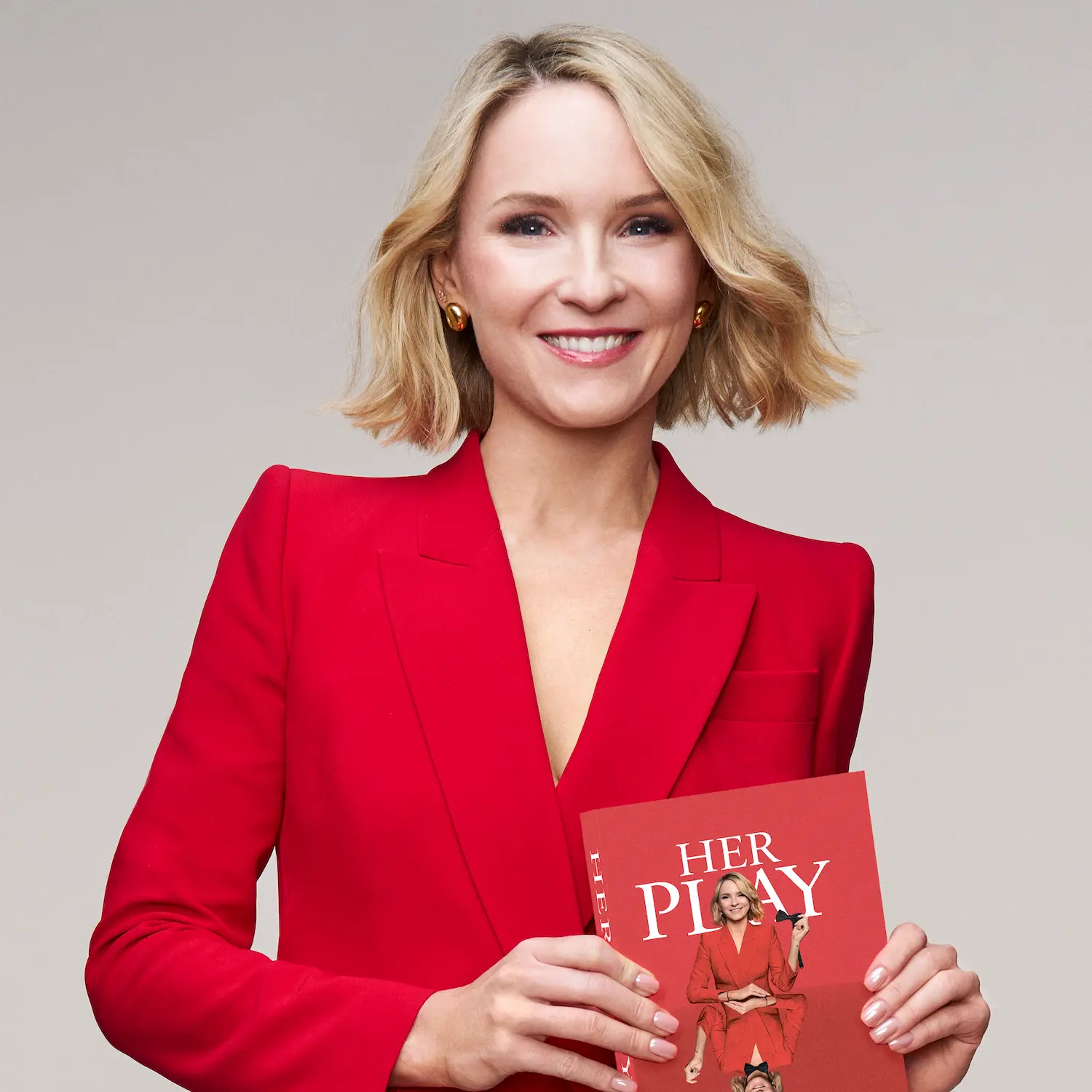
Karolina Pelc—founder, investor, mentor, author, and speaker at HerPlay—has built her career across casinos, corporations, and startups. In her conversation with Magda Klimko-Aydin, she shared what it takes to build a company ready for acquisition, how she redefined success after selling BeyondPlay, and why HerPlay is more than a book; it's a movement about mindset, reinvention, and owning your story.
 Magda Klimko-Aydin :
You’ve worked everywhere: casinos, corporations, and startups, and finally built your own company. What lessons from your early days still shape how you lead today?
 Karolina Pelc :
Working in land-based casinos taught me resilience, how to stay composed under pressure and perform in high-stakes environments where every second matters. The cruise ships, on the other hand, demanded constant adaptability, new cultures, new teams, and new situations every few weeks. But it was my time at LeoVegas that truly shifted my perspective. That’s where I got a front-row seat to what I call “Founder 101” — seeing firsthand how vision, speed, and culture drive growth. Coming from the corporate world and being closely exposed to multiple M&As gave me a real advantage: I had the chance to observe the do’s and don’ts years before becoming a founder myself. Those early lessons still guide how I build and lead—with awareness that adaptability and timing matter as much as vision.
Magda Klimko-Aydin :
When you started BeyondPlay, you already had a clear goal: to build a company that could be sold one day. That’s not how most founders think in the beginning. What made you take that approach from day one?
Karolina Pelc :
I’d seen too many startups fail not because the idea wasn’t good, but because the endgame wasn’t clear. Having spent years inside large operators and suppliers, I understood what acquirers look for: structure, scalability, and culture. I wanted BeyondPlay to be built from day one as acquisition-ready: a strong product, a transparent team, and a brand that could slot seamlessly into a bigger ecosystem. It wasn’t about chasing a “quick exit”. It was about building something solid enough to grow fast, yet smart enough to stay optional. That clarity helped us make better decisions early on and ultimately made the exit to FanDuel feel intentional, not accidental.
Magda Klimko-Aydin :
Selling BeyondPlay to FanDuel must have been both exciting and emotional. What was the hardest part of letting go after the sale?
Karolina Pelc :
Letting go of control. When you build something from scratch, it becomes part of your identity. BeyondPlay was my everything for three years — my vision, my team, my pace. After the acquisition, I stayed on for integration, but the dynamic changed. Suddenly, you’re not the final decision-maker. The hardest part was learning to trust that what you built could thrive without you. But that’s also the point of good leadership—if your company can’t survive without you, you haven’t really built a company; you’ve built a dependency.
Magda Klimko-Aydin :
After the sale, you suddenly had time to breathe again. How did that change the way you see success and yourself as a leader?
Karolina Pelc :
I won’t lie—I went through a mild existential crisis. For years, everything was about the next goal, the next deal, the next round. Then suddenly, it was done. I caught myself asking: Was that it? Am I finished? I tried to take it slow for a while, but the biggest acceptance came from realising that stillness just isn’t how I’m wired. I thrive in intensity and momentum — that’s my natural state. So not long after the sale, while still running the company and finalising the integration, I threw myself into a full-scale book project, trained as a professional speaker, and began travelling to conferences and summits to expand my network as an entrepreneur, speaker, and author. That period reminded me that fulfilment for me isn’t in stopping—it’s in evolving, creating, and keeping the energy moving forward with purpose.
Magda Klimko-Aydin :
Many people try to separate their work and personal lives, but you argue they’re deeply connected. What helped you accept that balance isn’t about equality but about harmony over time?
Karolina Pelc :
For years, I chased the mythical “balance” — and all it gave me was guilt. The truth is, life moves in seasons. Sometimes you lean into your ambition; other times, your relationships or your health need more of you. The key is harmony, not symmetry. Accepting that made me more compassionate toward myself and others. The same woman who built a startup while fundraising and managing a team is also the one who needed to pause, heal, and write a book. Both are valid — just different chapters of the same story.
Magda Klimko-Aydin :
In Her Play, you write about the psychology behind risk and transformation. What made you want to explore the mindset side of success, not just the business side?
Karolina Pelc :
Because mindset is the real differentiator. I’ve met brilliant people who never took the leap and others with average resources who built empires — the difference was how they thought. Her Play grew out of that realisation: that the game is mental long before it’s material. I wanted to deconstruct luck, confidence, reinvention, and risk through lived experience — to show that success isn’t magic; it’s engineered serendipity.
Magda Klimko-Aydin :
Her Play also looks at identity: how we evolve, fail, and rebuild ourselves through each chapter. What do you hope readers will take away about owning their story instead of letting someone else define it?
Karolina Pelc :
That every setback can become a strategy. Too often, we wait for validation before owning our narratives. I want readers to see power in imperfection — that your “detours” are often the most valuable parts of your journey. When you tell your story on your own terms, you stop being a character in someone else’s version of your life and start becoming the author of it.
Magda Klimko-Aydin :
You’ve said you’re now focused on supporting other women founders. How do you see Her Play fitting into that: as a book, a message, or maybe even a movement?
Karolina Pelc :
All three. Her Play started as a book, but it’s evolving into a mindset and a community—a space where women (and men) can learn to take bold risks, bet on themselves, and redefine success. It’s about giving others the tools to engineer their own luck. The book is the first card played — the movement is everything that follows.
Over to You: And there you have it! A huge thank you to Karolina Pelc for sharing her incredible journey from building BeyondPlay to championing the power of mindset, reinvention, and owning your story through Her Play.
If Karolina’s story and insights have inspired you, be sure to follow her journey and the movement she’s creating with Her Play. It’s not just about business; it’s about evolving, creating, and redefining what success looks like.
You can dive deeper into Karolina’s philosophy and get your hands on Her Play to learn how to bet on yourself and redefine success.

