

Ace Alliance iGaming Awards 2026
Check out the winners.
See The Winners!
Table Of Content :

Austria’s Gambling Reform Bill Clears Finance Committee, Advancing Online Market Liberalisation

trust
Ace Alliance: Delivering Trust Through Expertise
From exclusive events and interviews to real-time market trends, Ace Alliance brings you unbiased, well-informed, and data-driven content. Our editorial team adheres to strict editorial standards, ensuring that the information you receive is not only relevant but also trustworthy.

Built by market experts hosting events since 2023, with our first event in Riga, Latvia gathering over 300 top level iGaming industry executives, Ace Alliance is able to provide you with reliable information from direct interaction with experts and leaders in the sector.
Altay
Altay Celikkaya
Content Manager
Updated:
Reading Time: 3 minutes

Austria has moved closer to ending its long-standing online gambling monopoly after the National Council’s Finance Committee approved a comprehensive gambling reform bill on November 24, 2026. The legislation proposes a competitive licensing framework, stronger player protection requirements, and expanded enforcement powers against unauthorised operators.

According to the Austrian Parliament’s official announcement, the proposed amendments to the Gambling Act and Telecommunications Act 2021 received majority support from the governing coalition. Although the legislation has cleared a significant parliamentary hurdle, final adoption remains pending.
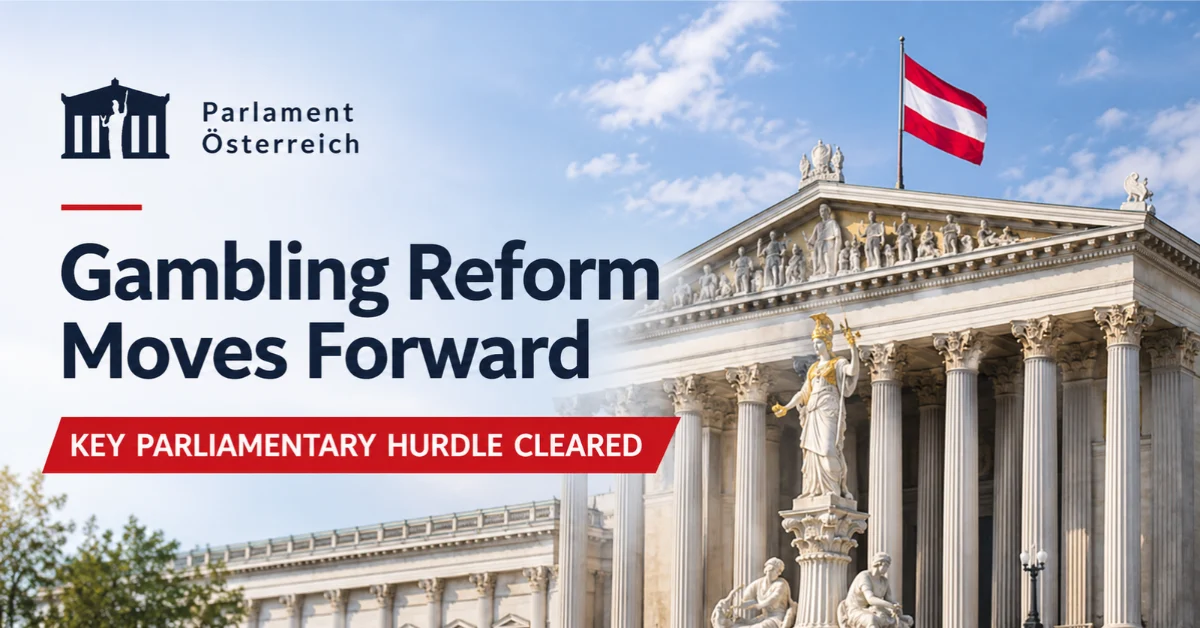
Austria’s gambling reform clears a key parliamentary hurdle toward market liberalisation

Regulation & Compliance

Key Takeaways From Austria’s Gambling Reform

  • Austria’s Finance Committee approved the gambling reform bill on November 24, 2026.

  • Multiple licensed operators could enter the regulated online gambling market under the proposed framework.

  • New concessions could be awarded from January 1, 2027, and become effective on October 1, 2027.

  • Operators without Austrian authorisation must withdraw from the market by the end of 2026 to qualify for the proposed licensing pathway.

  • Centralised deposit limits, a national exclusion register, and payment-blocking measures would strengthen regulatory oversight.

  • The extended EU standstill period remains in place until December 7, 2026.

Austria Advances Plans to End Its Online Gambling Monopoly

The committee decision marks a significant development following months of legislative and regulatory preparations. Ace Alliance previously reported on the first committee review of Austria’s gambling reform, scheduled after the government submitted its legislative proposal in August.

Under the proposed framework, Austria would replace its existing online gambling monopoly with a regulated concession system accommodating multiple operators. The government aims to reduce unauthorised gambling activity by bringing more businesses under domestic regulatory supervision.

For international operators, the reform represents a potential market-entry opportunity. However, access would depend on meeting Austria’s financial, legal, and operational requirements rather than simply holding a license in another European jurisdiction.

Strict Licensing Conditions for Previously Unauthorised Operators

Companies currently serving Austrian customers without domestic authorisation would need to cease those activities before the end of 2026 to remain eligible under the proposed licensing timetable. Applicants would also need to settle outstanding tax liabilities and comply with all final court judgments arising from player protection litigation before obtaining a concession.

These requirements are particularly relevant following the recent CJEU judgment concerning Malta’s Bill 55, which left questions surrounding the cross-border enforcement of gambling-related judgments unresolved. Operators considering entry into the Austrian market will therefore need to assess historical liabilities alongside their prospective licensing and compliance costs.

Stronger Player Protection and Enforcement Measures

The reform places considerable emphasis on centralised player protection. Proposed safeguards include a national exclusion register and mandatory deposit limits that apply across operators.

Describing the intended improvement in consumer safeguards, Finance Minister Markus Marterbauer said:

Player protection on a new level.

Authorities would also gain additional enforcement tools, including network blocking, payment blocking, and undercover compliance checks targeting unauthorised gambling services. A dedicated gambling and player protection body is also proposed to support market monitoring and scientific research.

For platform providers, payment processors, and compliance technology suppliers, the framework could introduce new technical requirements involving data exchange, transaction monitoring, and centralised player protection infrastructure.

Political Opposition Highlights Regulatory Challenges

Despite receiving support from the Austrian People’s Party, Social Democratic Party, and NEOS, the legislation faced opposition from the Freedom Party and the Greens. The Freedom Party questioned whether previously unauthorised operators should qualify for domestic concessions. The Greens argued that the proposal placed too much emphasis on operator interests and raised concerns about the scope of player protection measures. These disagreements remain relevant as the legislation progresses toward final parliamentary consideration.

What Comes Next for Austria’s iGaming Market?

Following Malta’s intervention in the EU review process, the mandatory standstill period was extended until December 7, 2026. Committee approval allows Austria to advance its legislative preparations, but it does not constitute final adoption.

For operators and B2B suppliers, the proposed October 2027 market opening provides a potential planning horizon. Licensing eligibility, outstanding legal obligations, technical compliance, and regulatory implementation will remain key considerations as Austria moves toward a potentially competitive online gambling market.