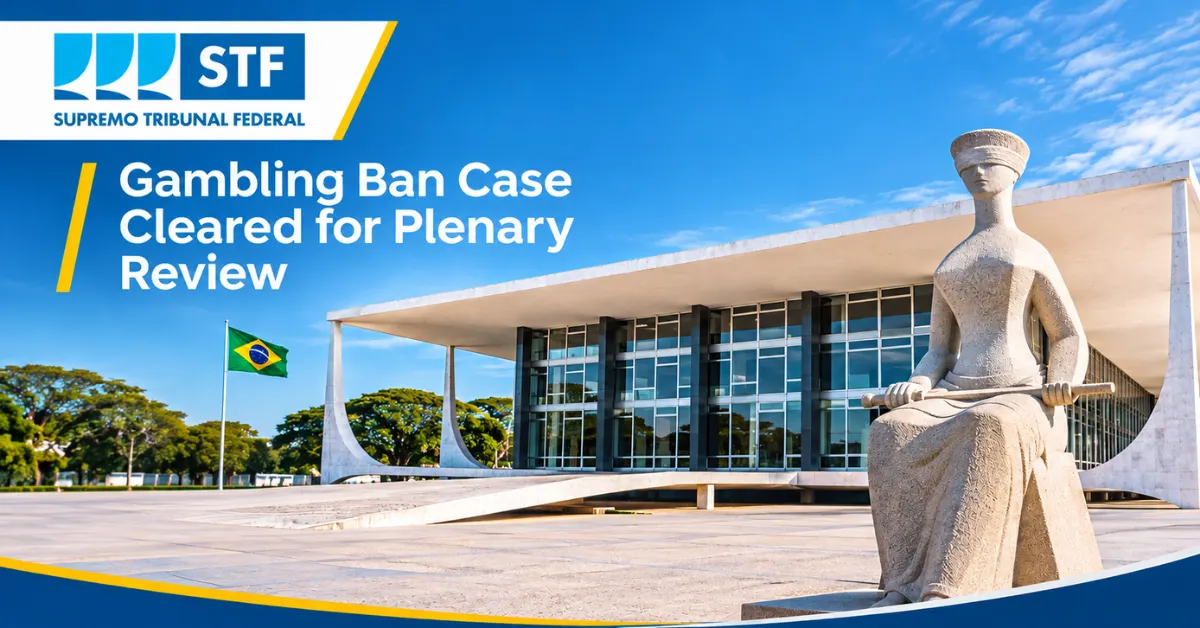
Home News Brazil’s Supreme Court Clears Gambling Ban Case for Plenary Review
Brazil’s Supreme Court Clears Gambling Ban Case for Plenary Review
STF Review Period Ends After 90 Days
According to the STF’s official case record, RE 966177 falls under Theme 924, concerning Article 50 of Decree-Law 3.688/1941. On 6 August, Dino requested additional time to examine the case following Fux’s initial vote.
Under Constitutional Court Procedural Amendment 58/2022, cases become automatically eligible for further consideration when the 90-day review period expires. The August hearing minutes were published on 13 August, allowing the case to return to the plenary process on 12 November. The appeal originated from a Rio Grande do Sul prosecution involving slot machines operated inside a bar.
Gambling Prohibition Could Affect Wider Betting Disputes
During the August proceedings, Fux argued that the 1941 gambling prohibition remained constitutionally valid.
Referring to the state’s authority to restrict harmful activities, Fux said:
Criminal law, by its very nature, operates by restricting freedom and autonomy of will.
Dino broadly supported the prohibition’s validity but suggested that the court’s legal interpretation should also address modern online betting. The STF previously agreed to consider the appeal alongside constitutional challenges involving Brazil’s 2023 betting legislation.
These proceedings differ from the more recent Supreme Court hearing on Brazil’s nationwide betting ban, which examined Provisional Measure 1.394/2026.
What Happens Next for Brazilian Operators?
STF President Edson Fachin must determine when the case returns to the plenary calendar. The development follows the court’s suspension of lower-court challenges to Brazil’s betting ban.
Meanwhile, lawmakers continue reviewing the provisional measure, which has already attracted numerous proposed amendments concerning betting licences. For operators, suppliers and affiliates, the eventual judgment could clarify the constitutional framework governing gambling restrictions.
However, confirming the validity of the 1941 prohibition would not automatically invalidate every law permitting regulated betting.
Until further judicial decisions emerge, the legal uncertainty surrounding Brazil’s gambling market remains unresolved.