Ace Alliance Horizon & Speed Rome
Early Bird Passes Available! | November 2, 2026
Get Your Pass!
Table Of Content :

Genius Sports Research Maps the Multiscreen Future of Sports Advertising

trust
Ace Alliance: Delivering Trust Through Expertise
From exclusive events and interviews to real-time market trends, Ace Alliance brings you unbiased, well-informed, and data-driven content. Our editorial team adheres to strict editorial standards, ensuring that the information you receive is not only relevant but also trustworthy.

Built by market experts hosting events since 2023, with our first event in Riga, Latvia gathering over 300 top level iGaming industry executives, Ace Alliance is able to provide you with reliable information from direct interaction with experts and leaders in the sector.
Altay
Altay Celikkaya
Content Manager
Updated:
Reading Time: 3 minutes

Genius Sports has published research examining how television and mobile are combining into one sports viewing and advertising environment. Released on 31 August 2026, The Companion Screen draws on a survey of 1,001 US adults, balanced to Census figures for age, gender, income and region. The findings indicate that weekly sports viewers increasingly expect advertising to reflect their interests and the action unfolding during a game. For sportsbooks, affiliates and media owners, that shift changes how campaigns can be planned, timed and measured.

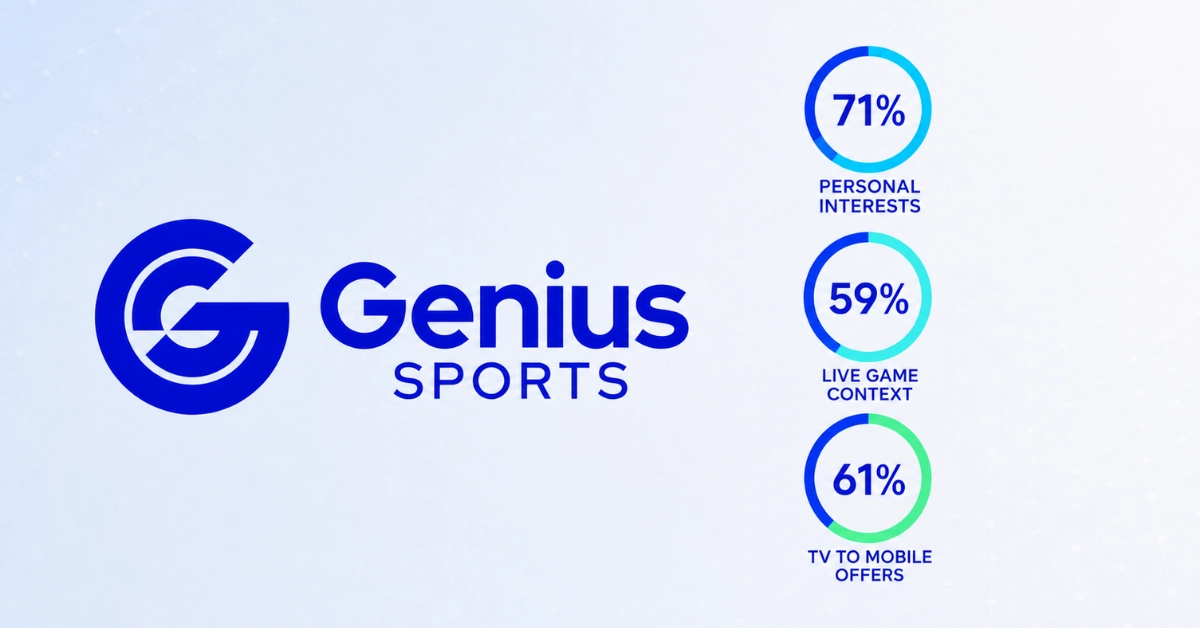
Genius Sports logo beside charts showing 71% for personal interests 59% for live game context and 61% for TV to mobile offers.

Affiliate & Marketing

Key Takeaways From the Companion Screen Data for Sports Marketers

  • Seven in ten weekly sports viewers want mobile advertising matched to their personal interests.

  • Live game context matters, with 59% preferring advertising connected to the action they are watching.

  • Halftime, scoring plays and close finishes create the strongest reported windows for relevant messaging.

  • Connected television and mobile journeys could support more immediate and measurable campaign responses.

  • Operators must balance moment-based activation with consent, age controls and market-specific advertising rules.

Mobile Becomes Part of the Main Sports Experience

According to the official Genius Sports announcement, 71% of people who watch sport at least weekly want mobile advertising personalised to their interests. Another 59% want advertising related to what is happening in the game, while 61% would welcome a personalised mobile offer connected to an advert they had just seen on television.

The results challenge the practice of treating television and mobile as separate channels. Viewers use their phones during matches to check scores, follow statistics, message friends and browse social media. Mobile can therefore extend the viewing experience and provide a response channel when the audience is engaged.

Tony Marlow, Chief Marketing Officer at Genius Sports, summarised the change by saying:

Mobile is no longer a ‘second screen’; it’s the companion screen.

Live Moments Reshape Advertising Inventory

Halftime was identified by 30% of respondents as a moment when relevant advertising could have its greatest impact. A team scoring or making a big play followed at 29%, while close or exciting periods were selected by 23%.

For iGaming businesses, these moments can influence media buying, creative delivery and affiliate activity. A generic promotion scheduled before a match may carry less contextual value than a compliant message linked to a break, score or momentum change. Campaign systems must still coordinate live data, audience permissions, creative approval and responsible gambling safeguards.

Genius Sports positions its Fan Graph and Moment Engine as the technology supporting this model. The Fan Graph combines identity, interests and behavioural signals, while the Moment Engine uses live sports data to identify significant events during play. The proposition is to connect the audience, screen and sporting moment rather than repeat one advertisement across devices.

Measurement must account for visibility embedded in sports content. Research into gambling branding across digital football coverage found that pitchside displays and pre-roll advertising can extend exposure from live broadcasts into online highlights. Frequency management becomes more complex when viewers encounter a brand through paid inventory, sponsorship assets and redistributed footage.

Tournament Demand Adds a Market-Level Variable

Major events create another layer of complexity. Analysis of World Cup iGaming demand across European markets shows that football culture, market scale and regulation can influence acquisition conditions differently. Multiscreen activation therefore cannot rely on one universal tournament plan. Operators need local audience data and market-specific conversion assumptions alongside live match signals.

The US-based sample also limits how the percentages can be transferred to other jurisdictions. Audience preferences may be similar elsewhere, but advertising rules, product availability and attitudes towards betting differ materially. Local validation remains necessary before applying the findings to campaign forecasts.

Personalisation Does Not Replace Compliance

For regulated betting businesses, better timing does not create automatic permission to advertise. France’s regulator has highlighted the exposure risks attached to new in-match inventory through its World Cup betting advertising warning. The guidance focused on marketing intensity, younger audiences and additional broadcast windows created by hydration breaks.

Companion-screen strategies can make advertising more relevant and measurable, but they also require suppression controls, consent, age assurance and jurisdiction-aware delivery. Television, mobile, audience data and game context now need to be governed as one connected advertising system in every market.