

Ace Alliance iGaming Awards 2026
Check out the winners.
See The Winners!
Table Of Content :

Lithuania Online Gambling Revenue Nears €179m as Digital Market Share Hits 78%

trust
Ace Alliance: Delivering Trust Through Expertise
From exclusive events and interviews to real-time market trends, Ace Alliance brings you unbiased, well-informed, and data-driven content. Our editorial team adheres to strict editorial standards, ensuring that the information you receive is not only relevant but also trustworthy.

Built by market experts hosting events since 2023, with our first event in Riga, Latvia gathering over 300 top level iGaming industry executives, Ace Alliance is able to provide you with reliable information from direct interaction with experts and leaders in the sector.
Altay
Altay Celikkaya
Content Manager
Updated:
Reading Time: 2 minutes

Lithuania’s online gambling market generated almost €179 million in gross gaming revenue (GGR) during the first nine months of 2026, accounting for 78% of the country’s regulated gambling revenue. The latest figures, released on 23 November by the Gaming Supervisory Authority (LPT), show continued digital growth while land-based operations contracted.

Total gambling GGR reached €229 million from January to September, up 14% year on year. GGR represents stakes received by operators minus winnings paid out, rather than the total amount wagered.
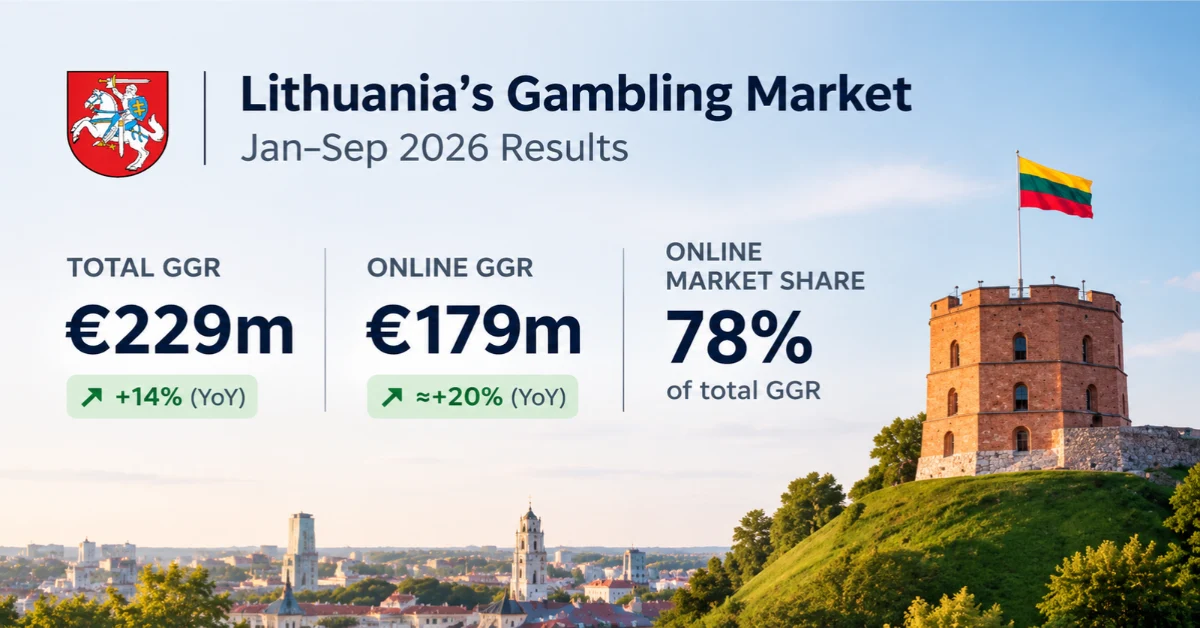
Alt: Lithuanian flag and Vilnius skyline alongside the 78% online gambling market share figure.

Reports

Key Takeaways From Lithuania's Gambling Revenue Report

  • Online gambling GGR approached €179 million, approximately one-fifth higher than a year earlier.

  • Digital channels accounted for 78% of Lithuania’s €229 million gambling market.

  • Remote category A gaming machines generated €131.6 million, up about one-third.

  • Land-based gambling revenue declined 6.5% to around €50 million.

  • Gambling and lottery taxes totalled €74.19 million, a 15% annual increase.

Online Gaming Machines Drive Revenue Growth

According to the LPT’s official nine-month market report, online category A gaming machines were the largest revenue contributor. This segment produced €131.6 million in GGR, approximately one-third more than in the corresponding 2025 period. Online table games generated €17.7 million, up 24%. However, not every digital product followed the wider trend. Revenue from remote category B machines fell 67% to approximately €608,700.

The figures highlight different growth patterns within Lithuania’s online market. For B2B platform providers, game developers and operators, the product-level breakdown provides a clearer picture of where revenue expansion is concentrated.

Land-Based Revenue Declines as Online Share Remains Stable

Revenue at physical gambling venues declined 6.5% to approximately €50 million. Land-based table games contributed €10.8 million, reinforcing the contrast between remote and in-person channels. Online gambling’s 78% market share also matched the level recorded during the first half of 2026. The latest results therefore indicate sustained digital dominance rather than another significant shift towards online gaming.

This market structure provides context for recent investment activity. Fortuna Entertainment Group completed its acquisition of a controlling stake in Lithuania’s TOPsport in August, expanding its presence in a market where remote gambling generates most operator revenue.

Gambling Tax Revenue Increases by 15%

Lithuania collected €74.19 million in gambling and lottery taxes during the nine months, representing a 15% annual increase. Gambling operators contributed approximately €50 million, while lottery businesses accounted for €24.2 million.

Lottery ticket sales reached €131.5 million, increasing 9% year on year. These sales are separate from gambling GGR. The figures arrive as Lithuania considers progressive gambling taxation, which could change operators’ tax obligations.

The government has also proposed mandatory player cards from 2029, intended to strengthen monitoring across online and land-based gambling. The latest revenue report has established neither proposal, and implementation remains subject to the legislative process.

For operators, technology suppliers and investors, Lithuania’s latest figures provide an updated benchmark for digital market performance. Future regulatory decisions will determine how the growing online sector adapts to potential changes in taxation and compliance requirements.