Ace Alliance Horizon & Speed Rome
Early Bird Passes Available! | November 2, 2026
Get Your Pass!
Table Of Content :

Mexico Gambling Reform Nears Cabinet Review Before Congress

trust
Ace Alliance: Delivering Trust Through Expertise
From exclusive events and interviews to real-time market trends, Ace Alliance brings you unbiased, well-informed, and data-driven content. Our editorial team adheres to strict editorial standards, ensuring that the information you receive is not only relevant but also trustworthy.

Built by market experts hosting events since 2023, with our first event in Riga, Latvia gathering over 300 top level iGaming industry executives, Ace Alliance is able to provide you with reliable information from direct interaction with experts and leaders in the sector.
Altay
Altay Celikkaya
Content Manager
Updated:
Reading Time: 3 minutes

Mexico’s proposed overhaul of its federal gambling law is approaching government scrutiny, but it has not yet entered the legislative process. Interior Secretary Rosa Icela Rodríguez said the internal review involving federal agencies is almost complete and that the proposal will next be considered by the security cabinet. After that assessment, it could move towards Congress.

The initiative could replace the Federal Law on Games and Draws, which has governed the sector since 1947. However, no bill has been introduced, the draft is not publicly available, and there is no timetable for a congressional vote.

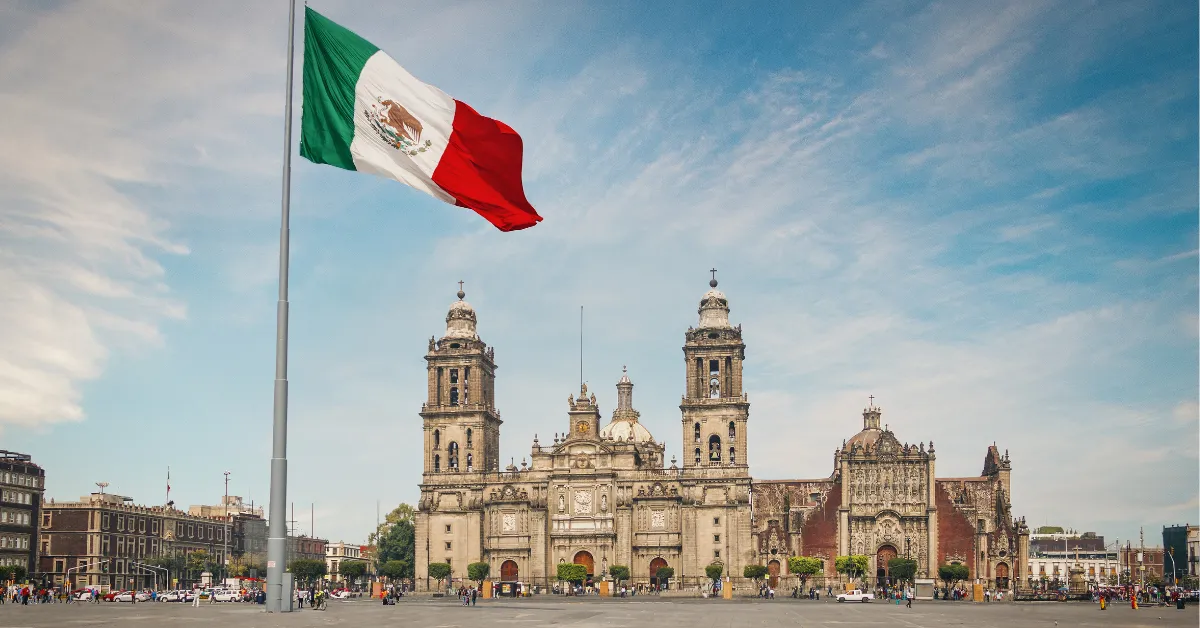
Mexican flag flying over Mexico City’s Metropolitan Cathedral as the country’s gambling reform approaches cabinet review

Regulation & Compliance

Key Takeaways on Mexico’s Gambling Reform and Next Steps

  • The internal government review is almost complete, according to La Jornada.

  • The security cabinet will consider the proposal before the government decides whether to advance it towards the legislative process.

  • Congress has not received a bill, as the proposal remains under executive-branch review.

  • The complete draft is not publicly available, so its provisions and potential obligations for operators cannot yet be independently assessed.

  • No approval timetable has been announced, and the proposal would still require consideration by Congress before it could become law.

A 1947 Framework Faces Modern Market Pressures

Mexico’s law generally prohibits gambling and betting while giving the Interior Ministry authority to permit and supervise eligible establishments. Its age and structure have fuelled debate over whether it can govern today’s mix of land-based casinos, online betting, digital payments and cross-border services.

The reform process follows other attempts to address gaps without waiting for a replacement of the law. One 2026 initiative included proposals to restrict gambling advertising to late-night hours, focusing on minors’ exposure and the visibility of betting promotions around sport. That measure illustrates how consumer protection questions are already reaching lawmakers while the broader framework remains under review.

The scale of activity outside regulated channels is another concern for policymakers. An industry analysis estimated that unregulated operators captured 69% of World Cup online betting. Although that figure is not specific to Mexico, it indicates the enforcement and channelisation challenges facing countries seeking to direct betting towards supervised operators.

Casino Oversight and Financial-Crime Concerns

Rodríguez described the proposal as a cross-government review involving departments responsible for casinos, betting establishments and entertainment centres. Rodríguez said,

The internal review with the different government agencies is almost complete.

She also linked the government’s approach to enforcement and integrity. She said operators had previously been warned against attempting to corrupt ministry personnel and that officials involved in wrongdoing could face imprisonment. In return, the ministry would work through outstanding regulatory procedures.

The secretary reported that sanctions and closures had affected establishments allegedly connected with money laundering and tax fraud. These actions involved cooperation between the Interior Ministry, the Attorney General’s Office and the Finance Ministry’s Financial Intelligence Unit.

A public figure of 13 casinos has been associated with those actions, while Rodríguez estimated that approximately 20 establishments may have faced problems. She did not provide a definitive total. The distinction should be retained because the wider number was presented as an estimate rather than a confirmed enforcement count.

These remarks suggest that institutional oversight, corruption prevention and financial transparency are central to the government’s policy discussion. The unpublished draft may address some of these areas, but its precise scope cannot be confirmed until an official text is released.

Risk-Based Supervision Could Shape Future Compliance

Any modernised framework will also be judged on how clearly it allocates responsibilities between operators, regulators and law-enforcement bodies. Internationally, risk-based gambling supervision increasingly focuses resources on customers, transactions, products and operating channels that present greater exposure to financial crime.

For Mexican operators, the questions will concern licensing, recordkeeping, customer checks, beneficial ownership, reporting duties and the treatment of higher-risk transactions. Whether these requirements appear in the gambling bill itself, separate regulations or existing financial-crime rules remains unknown.

The next development will therefore be either confirmation that the security cabinet has completed its review or the formal submission of a bill to Congress. Until then, at this preliminary policy stage, the proposal should be described as a government reform under internal review—not an approved law or a completed legislative overhaul.