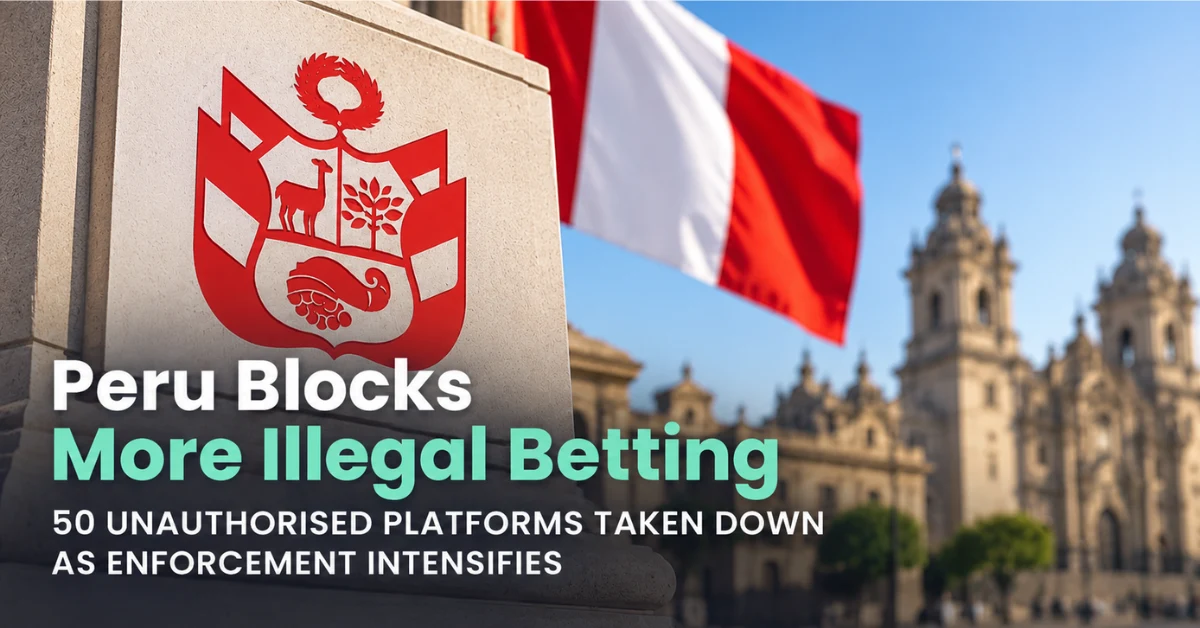
Home News Peru Blocks 50 Unauthorised Betting Platforms as Crackdown Widens
Peru Blocks 50 Unauthorised Betting Platforms as Crackdown Widens
Payment and Content Restrictions Widen the Enforcement Scope
The latest action goes beyond domain access. Mincetur has also secured the removal of gaming content and payment methods linked to websites operating without authorisation. That directly targets infrastructure used by illegal operators to acquire players and process transactions.
According to the statement, translated from Spanish. Mincetur said:
These actions reaffirm the commitment to the formalisation of the sector and the promotion of a responsible and safe gaming environment.
For licensed operators and suppliers, the action sharpens the distinction between Peru’s regulated gambling market and businesses outside the licensing framework. The DGJCMT also maintains a database of around 2,000 domains identified as illegal or unauthorised by regulators in other jurisdictions.
Authorities recently seized sports betting equipment from an unauthorised venue in Chilca, Junín, in an operation involving Mincetur, the National Police and the Public Prosecutor’s Office.
The regulator has ordered the closure of 17 sports betting venues and 10 slot machine halls. It has also carried out 5,195 inspections of casino and slot venues and 4,572 inspections involving technology platforms and betting locations.
Peru Joins Wider Regional Push Against Unlicensed Betting
Peru’s strategy reflects a broader Latin American shift towards stronger infrastructure-level enforcement. Chile has expanded blocking requirements to cover mirror gambling domains, while Brazil has reported blocking more than 60,000 illegal betting sites as enforcement increasingly includes financial disruption.
For B2B stakeholders, the latest action shows that licensing status, payment access and domain availability are closely connected compliance risks. With further platforms still targeted in 2026, operators, affiliates, payment providers and technology partners serving Peruvian users face growing pressure to verify that their market access and commercial relationships sit within the authorised framework.