

Ace Alliance Horizon & Speed Rome
Early Bird Passes Available! | November 2, 2026
Get Your Pass!
Table Of Content :

Peru Proposes Raising Online Betting Consumption Tax From 1% to 5%

trust
Ace Alliance: Delivering Trust Through Expertise
From exclusive events and interviews to real-time market trends, Ace Alliance brings you unbiased, well-informed, and data-driven content. Our editorial team adheres to strict editorial standards, ensuring that the information you receive is not only relevant but also trustworthy.

Built by market experts hosting events since 2023, with our first event in Riga, Latvia gathering over 300 top level iGaming industry executives, Ace Alliance is able to provide you with reliable information from direct interaction with experts and leaders in the sector.
Altay
Altay Celikkaya
Content Manager
Updated:
Reading Time: 2 minutes

Peru has introduced legislation proposing a fivefold increase in the Selective Consumption Tax (ISC) applied to online casino games and sports betting, potentially raising the rate from 1% to 5% of each wager.

Submitted on 6 October 2026 by lawmakers from the Partido Cívico Obras parliamentary group, the proposal aims to increase public revenue while supporting efforts to address gambling-related harm. The measure remains under parliamentary consideration and would apply to both domestic and foreign operators serving the Peruvian market.
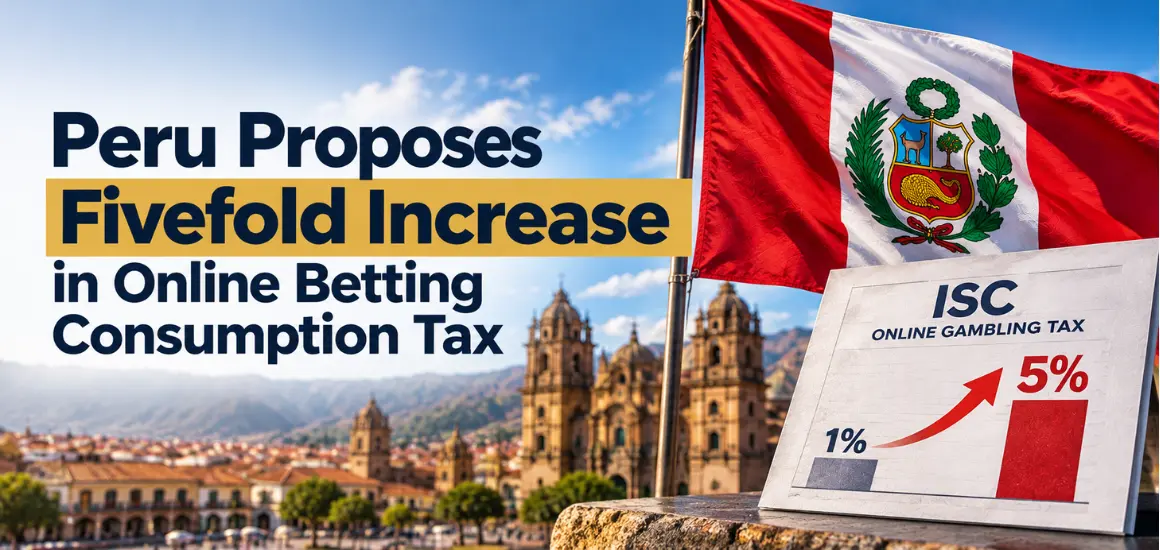
Peruvian flag and tax chart illustrating the proposed fivefold increase in online gambling consumption tax from 1% to 5%.

Regulation & Compliance

Key Takeaways From Peru's Proposed Betting Tax Increase

  • Peru proposes increasing the ISC on online gambling and sports betting from 1% to 5%.

  • The higher rate would apply to individual wagers rather than operators’ gross gaming revenue.

  • The existing 12% gaming tax would remain unchanged.

  • Domestic and international operators would face the same ISC rate.

  • The proposal remains in committee and has not become law.

Proposed Tax Increase Leaves Existing Gaming Duty Unchanged

The official bill submitted to Peru’s Congress, numbered 00519-2026-2031-CD, would increase the ISC without changing the country’s existing 12% gaming tax on gross gaming revenue (GGR). Unlike the GGR tax, the ISC applies to individual wagers, creating a separate financial obligation for operators.

The proposed increase would not affect land-based casinos or betting establishments. The legislation also maintains equal treatment for domestic and international operators, preserving existing rules for determining taxable transactions involving foreign platforms.

The proposal follows Peru’s continuing efforts to strengthen its regulated market, including the recent blocking of 50 unauthorised betting platforms.

Revenue and Player Protection Drive Tax Proposal

Lawmakers argue that the higher tax could generate additional public revenue while supporting measures addressing gambling-related harm. The proposal estimates that the current 1% ISC generates approximately S/324 million annually. Increasing the rate to 5% could theoretically raise revenue to S/1.62 billion. However, these figures are a static calculation, not a confirmed revenue forecast. The legislation also references 14,409 gambling addiction-related healthcare attendances recorded in Peru during 2025.

The bill said:

The proposed increase is not intended to prohibit remote gaming or remote sports betting.

The proposal comes as research highlights strong interest in online betting among Peruvian consumers, raising questions about market growth and safeguards for responsible gambling.

What the Proposed 5% Tax Means for Operators

For licensed operators, a higher consumption tax could affect pricing strategies, promotional budgets and operating margins. Companies may absorb the additional costs, adjust betting conditions or distribute the financial burden between their businesses and customers.

Similar taxation discussions are taking place elsewhere in Latin America, including Chile’s introduction of digital VAT requirements for foreign betting platforms.

However, Peru’s proposal still requires legislative approval. If enacted, the law would take effect following publication in the official gazette, with the new tax rate applying from the first day of the following calendar month.

For operators and B2B suppliers, the immediate priority is to monitor the bill’s progress and assess how a higher wager-based tax could affect their financial planning and commercial operations.