




A bipartisan group of U.S. lawmakers is preparing legislation to prohibit sports betting and casino-style contracts on federally regulated prediction market platforms, including Kalshi and Polymarket. The bill aims to close what legislators describe as a regulatory loophole allowing these platforms to operate outside traditional state gambling frameworks.
The proposal, led by Senators Adam Schiff and John Curtis, marks one of the most direct federal interventions into prediction markets to date, targeting their expansion into sports-related contracts.
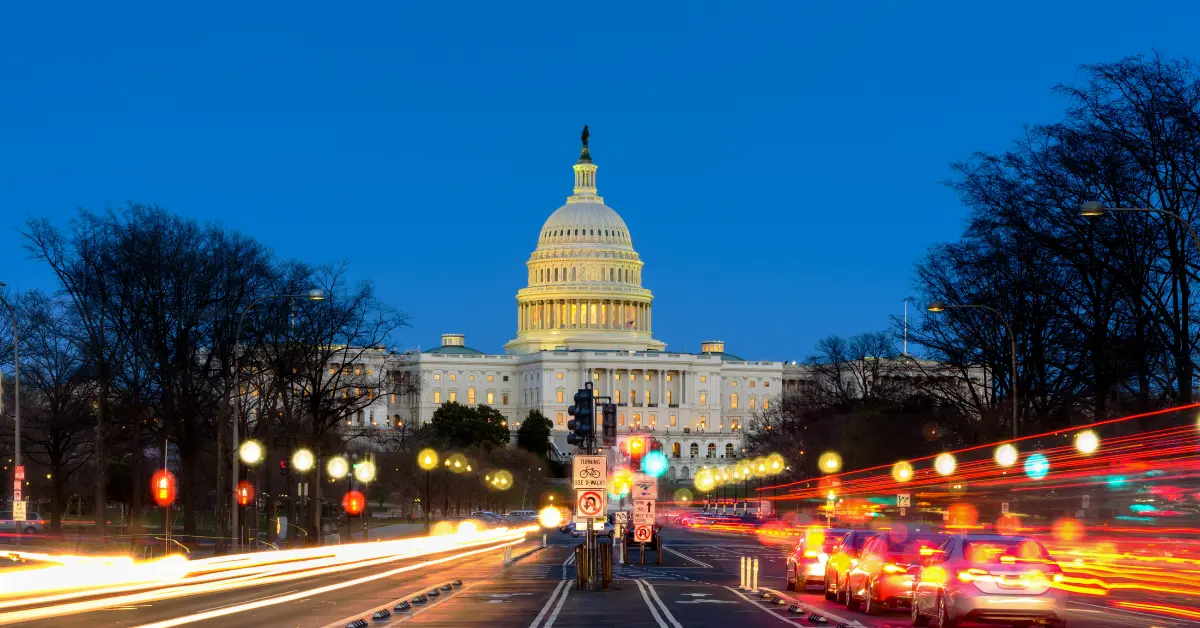
Federal Push to Close Prediction Market Loopholes
The proposed legislation reflects growing concern in Washington over the classification and oversight of event-based contracts.
- The bill would prohibit sports-related and casino-style contracts on CFTC-regulated platforms.
- Lawmakers argue prediction markets currently bypass state gambling laws and consumer protections.
- The measure directly challenges the expansion of platforms like Kalshi into sports-linked trading.
- It aims to align federal oversight with state-level regulatory frameworks.
- The proposal could significantly reshape competition between prediction markets and licensed sportsbooks.
According to reports, lawmakers view prediction markets as exploiting a gap between financial regulation and gambling law, enabling them to offer products that function similarly to sports betting without adhering to the same regulatory standards.
The bill would explicitly bar contracts tied to sporting events, as well as casino-style offerings such as slots or blackjack, from being listed on these platforms.
Growing Legislative Pressure Across Prediction Market Segment
The initiative forms part of a broader wave of legislative activity targeting prediction markets in the U.S., as policymakers respond to rapid market growth and rising ethical concerns.
Separate proposals have already sought to restrict betting on sensitive government actions, including military operations and political outcomes.
In parallel, U.S. proposals to ban public officials from participating in prediction markets highlight concerns over insider information and conflicts of interest within these platforms.
Meanwhile, the recently introduced BETS OFF Act targeting prediction market bets on government actions reflects an expanding regulatory focus beyond sports, covering events deemed sensitive or potentially subject to manipulation.
These overlapping legislative efforts indicate a coordinated attempt to redefine the legal boundaries of prediction markets at the federal level.
Operational Impact: Ban Threatens Core Revenue Streams of Prediction Platforms
The proposed bill introduces a critical inflection point for prediction market operators, particularly those relying on sports-linked trading volume.
Sports contracts account for a significant share of activity on platforms like Kalshi, making them central to user acquisition and revenue models. Limiting or removing these offerings could materially alter the viability of such platforms in the U.S. market.
At the same time, traditional sportsbook operators may benefit from reduced competition if prediction markets are restricted from offering comparable products.
The legislation also intensifies the ongoing jurisdictional conflict between federal regulators and state authorities. While the Commodity Futures Trading Commission maintains oversight over event contracts, states continue to challenge these offerings as unauthorised gambling.
If enacted, the bill would represent a decisive federal shift toward harmonising prediction market regulation with established gambling laws, potentially forcing operators to restructure product offerings or exit certain segments entirely.
The outcome will likely shape the future classification of prediction markets in the U.S., determining whether they remain financial instruments, are treated as gambling products, or evolve into a distinct regulated category.