
Ace Alliance iGaming Awards 2026
Check out the winners.
See The Winners!
Table Of Content :

US Congressional Hearing Examines College Sports Betting and Prediction Market Risks

trust
Ace Alliance: Delivering Trust Through Expertise
From exclusive events and interviews to real-time market trends, Ace Alliance brings you unbiased, well-informed, and data-driven content. Our editorial team adheres to strict editorial standards, ensuring that the information you receive is not only relevant but also trustworthy.

Built by market experts hosting events since 2023, with our first event in Riga, Latvia gathering over 300 top level iGaming industry executives, Ace Alliance is able to provide you with reliable information from direct interaction with experts and leaders in the sector.
Altay
Altay Celikkaya
Content Manager
Updated:
Reading Time: 3 minutes

US lawmakers examined the risks of sports betting on college campuses during a congressional hearing on 11 November 2026, with Massachusetts Gaming Commission (MGC) Chair Jordan Maynard raising concerns about student protections and the expansion of prediction markets.

The House Subcommittee on Higher Education and Workforce Development held the hearing, titled The Rise of Sports Gambling on College Campuses, to assess gambling-related financial harm, student-athlete integrity and regulatory safeguards.

Maynard’s testimony highlighted Massachusetts’ existing sports betting restrictions and warned that sports-related prediction markets could undermine state-level consumer protections.
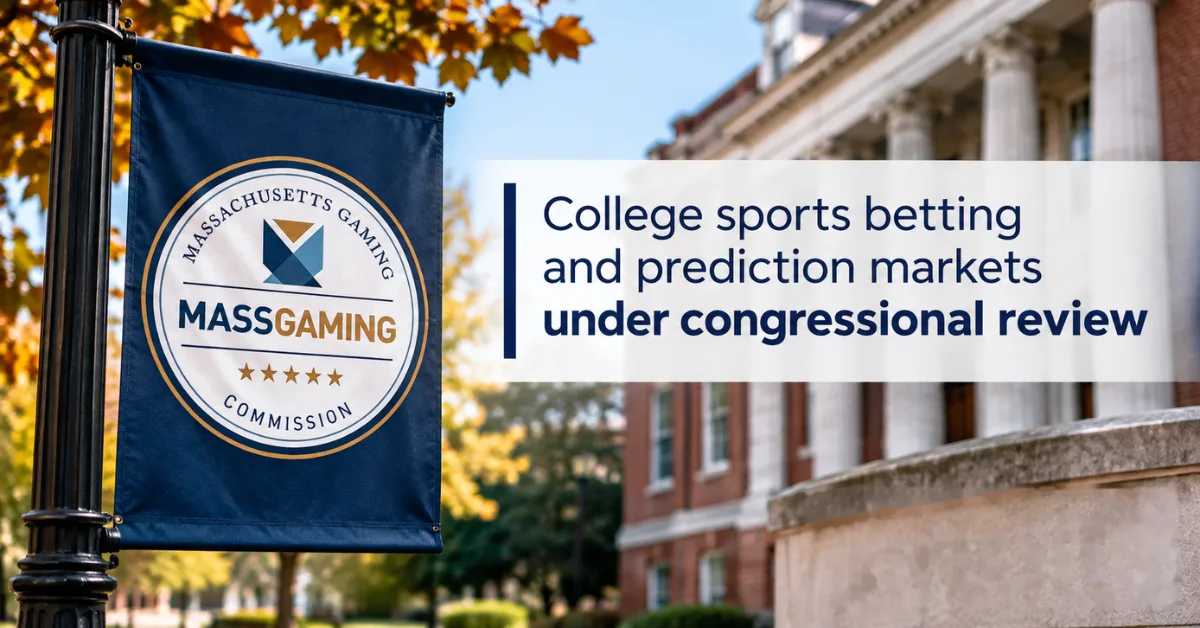
A banner outside a university building as Congress examines prediction market risks.

Regulation & Compliance

Key Takeaways From the US Congressional Sports Betting Hearing

  • Congress examined gambling-related risks affecting college students, including financial harm and athlete harassment.

  • Massachusetts requires sports bettors to be at least 21 and restricts advertising targeting younger audiences.

  • The state prohibits individual player proposition bets on college sports and generally restricts betting on in-state college teams.

  • MGC Chair Jordan Maynard raised concerns about prediction markets offering sports-related contracts outside state licensing frameworks.

  • The hearing highlighted continuing disagreements over consumer protections and regulatory responsibility.

Massachusetts Regulator Highlights College Betting Safeguards

In his official written testimony to Congress, Maynard outlined Massachusetts’ approach to protecting young people since legal sports betting launched in 2023.

The state prohibits anyone under 21 from placing sports wagers. Licensed operators must use age-verification technologies, which Maynard said have prevented at least 11,000 underage account registration attempts.

Massachusetts also prohibits sportsbook advertising on college campuses and restricts marketing through channels where at least 25% of the audience is under 21.

Individual player proposition bets involving college athletes are prohibited, while wagering on Massachusetts college teams is generally restricted unless they participate in tournaments.

Maynard also highlighted the state’s Bet on Respect initiative, which addresses harassment directed at athletes, coaches and other sports participants.

Prediction Markets Raise Regulatory Concerns

Prediction markets formed another significant part of Maynard’s testimony.

He argued that platforms offering sports-related event contracts without state gambling licences could bypass protections applied to regulated sportsbooks.

Maynard said:

Allowing sports wagers through prediction markets creates confusion for consumers.

He pointed to differences in minimum participation ages, advertising restrictions and college athlete protections.

The concerns follow ongoing disputes over whether sports event contracts fall primarily under federal commodities regulation or state gambling laws.

As Ace Alliance previously reported on the CFTC’s geographic access requirements, federally regulated exchanges face questions about how domestic access rules interact with state restrictions.

The disagreement has also prompted legal action involving the DOJ, CFTC and Utah, reflecting the broader jurisdictional conflict.

Maynard’s position represents Massachusetts’ regulatory interpretation rather than a definitive national legal ruling.

Congressional Hearing Examines Student Gambling Harm

The hearing also considered research into gambling-related financial problems and mental health risks among university students.

Subcommittee Vice Chair Michael Baumgartner cited research indicating that 31% of male undergraduates and 25% of female undergraduates knew someone who had experienced financial or academic difficulties linked to online wagering losses.

Witnesses discussed gaps in university gambling education, screening programmes and support services.

Maynard recommended stronger protections against college player proposition bets, along with additional research and cooperation between regulatory authorities.

What Does the Hearing Mean for Sportsbook Operators?

For licensed sportsbooks, the discussion reinforces the importance of age verification, responsible gambling controls, advertising compliance and college athlete protections.

Prediction market platforms and their commercial partners face a different challenge as disputes over federal and state authority continue.

Some state regulators have already extended their scrutiny to suppliers. In October, Ohio warned licensed gambling suppliers about supporting unlicensed prediction markets.

The congressional hearing did not introduce new federal legislation or change existing gambling regulations.

However, it demonstrated continued scrutiny of how traditional sportsbooks and prediction market platforms address consumer protection, particularly where younger users and college sports are involved.