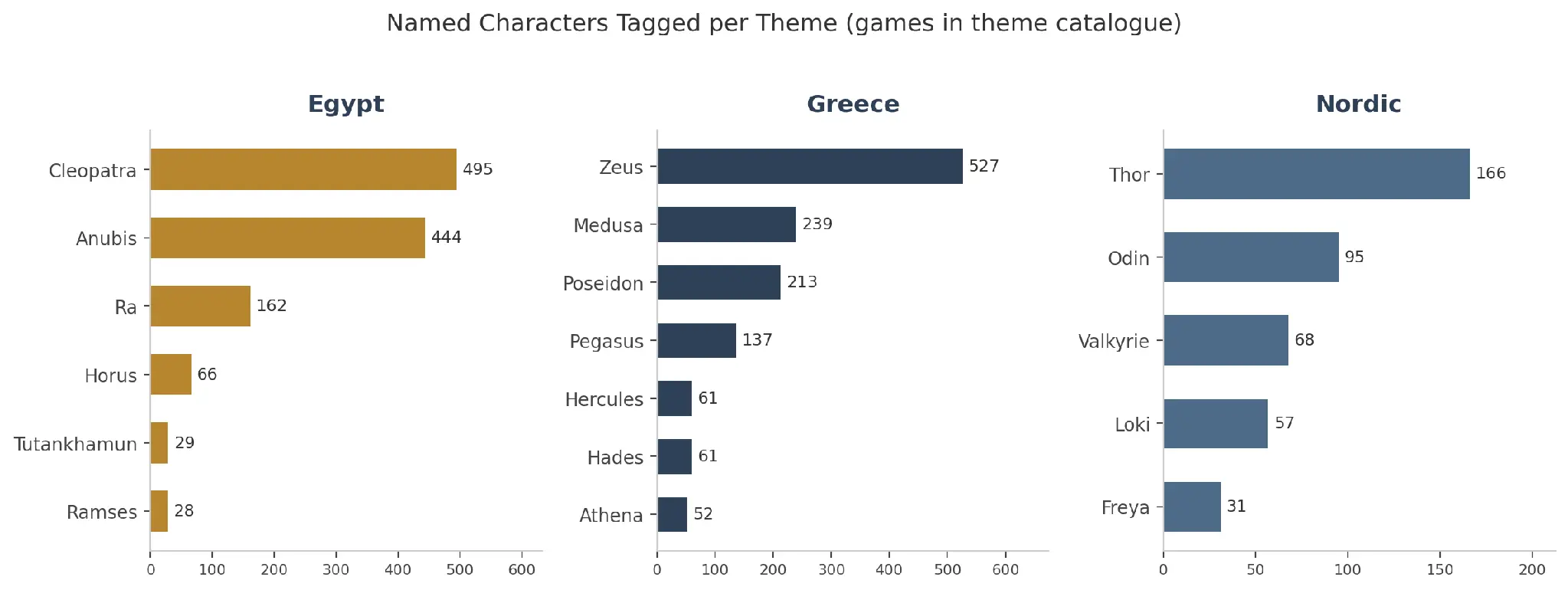
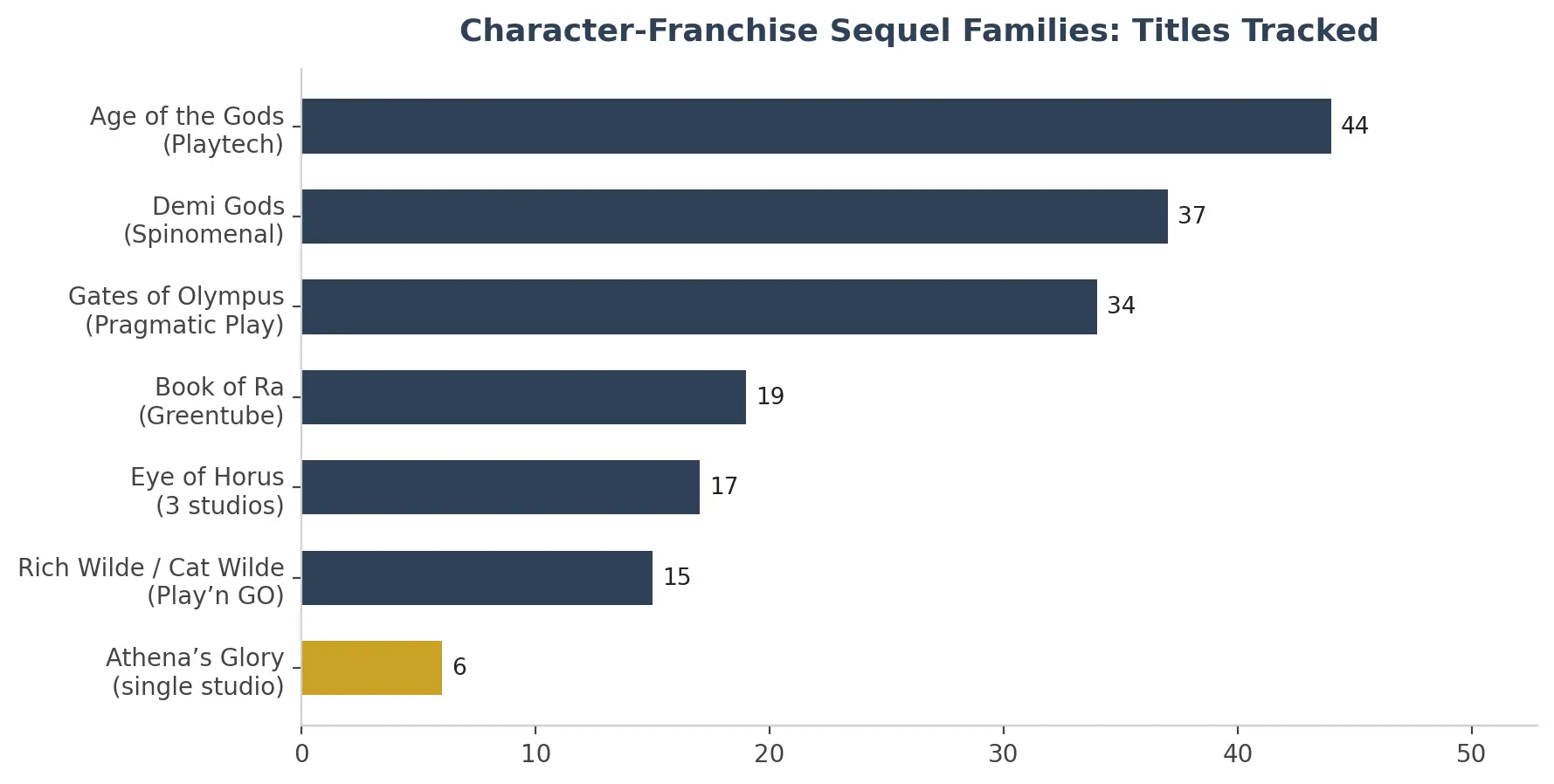
Eye of Horus is the outlier worth flagging on its own: 17 tracked titles split across three unconnected studios, Reel Time Gaming (the 2016 original), Blueprint and Merkur, with no shared ownership. That’s only possible because Horus, like Ra, Ramses or Zeus, is a mythological name nobody owns. SlotCatalog’s catalogue includes a near-identical case: The Pyramid of Ramses from CT Interactive and a separately branded The Pyramid of Ramses from Playtech, built around the same historical king, most likely with no licensing relationship between them. A studio-coined phrase like “Book of Dead” or “Gates of Olympus” is ownable; a god’s or pharaoh’s name never is. Athena’s Glory (six sequels since 2022) shows that a single studio can still build a defensible, ownable franchise around a mythological name. It’s just rare, and so far it’s the only goddess-led example in the entire dataset.
Sequels Are Getting Faster
Plotting each franchise’s release history shows an acceleration, not simple growth. New sequels are arriving faster than they did in the franchise’s early years, not at a steady pace. Comparing the average gap between releases in each franchise’s first half of life against its second half makes the acceleration explicit.
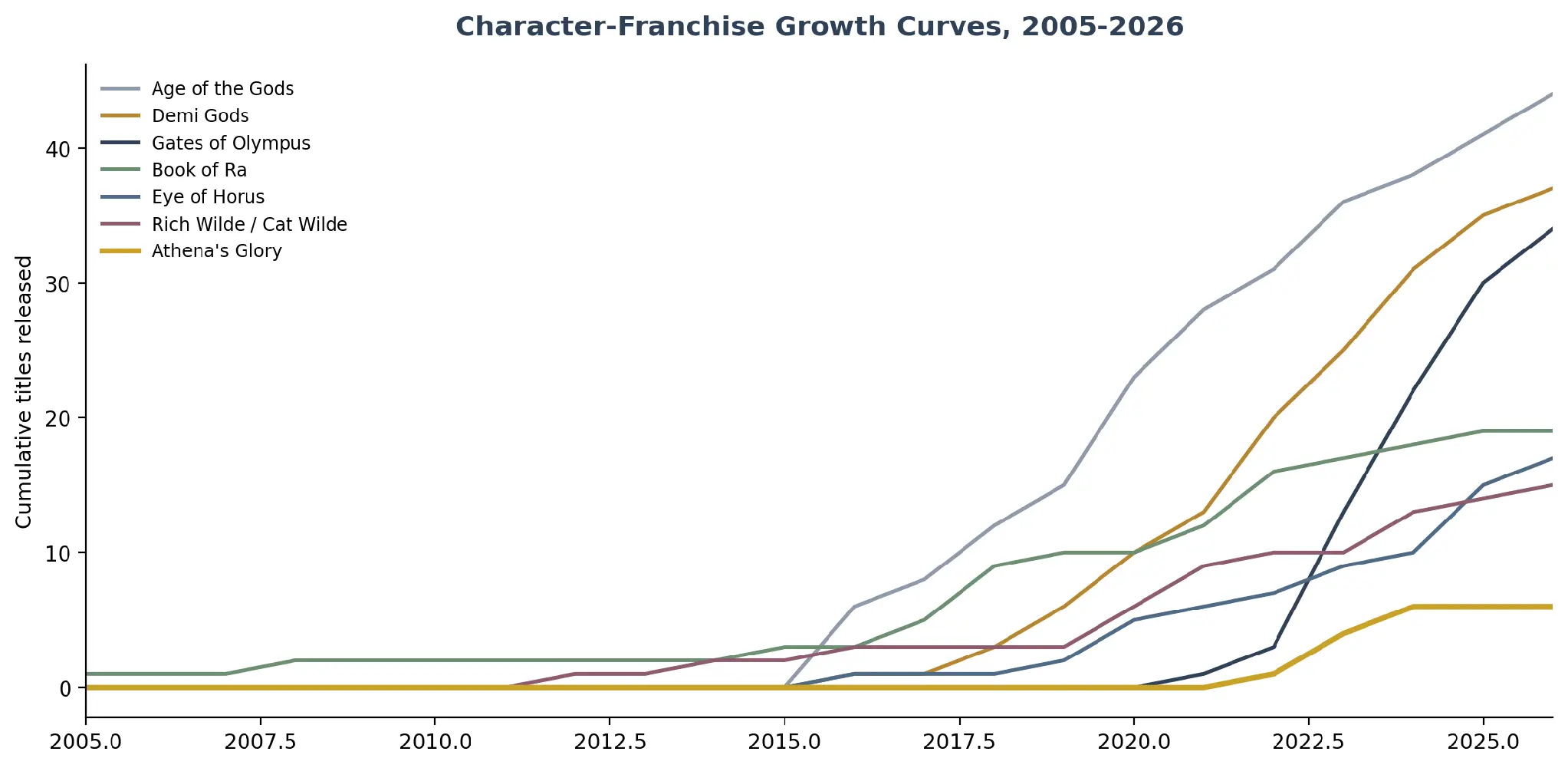
Five of the seven franchises are releasing sequels markedly faster now than in their early years. Book of Ra’s average gap between new entries has shrunk from over 19 months to under 8, and Demi Gods now ships a new variant roughly every ten weeks. The two exceptions are telling: Age of the Gods and Athena’s Glory are the two franchises built around a fixed multi-character roster or a single named goddess rather than a generic mechanic, and both have slowed rather than sped up. There may simply be a smaller pool of mythologically coherent variations to draw on once the roster is fixed, compared with a generic “demigod” or a mechanic-led brand that can be reskinned indefinitely.