

2026 iGaming Trendbook
Expert Insights from 50+ Industry Leaders
Download Now
Table Of Content :
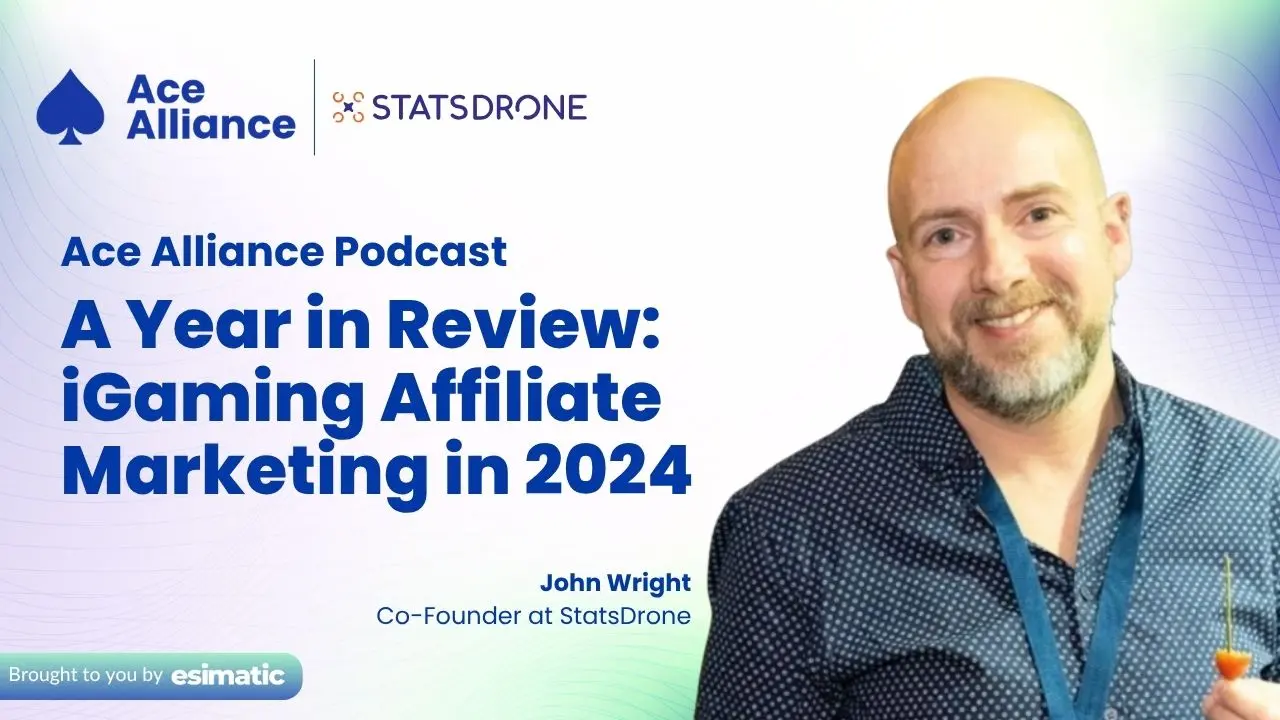
Episode 2: A Year in Review: iGaming Affiliate Marketing in 2024

Episode 2: A Year in Review: iGaming Affiliate Marketing in 2024

John Wright, Co-Founder of StatsDrone, and Magda Klimko-Aydin discuss the wins, challenges, and key shifts in iGaming affiliate marketing in 2024. Learn how Google updates and AI have impacted the industry and what’s in store for 2025.

Episode 2: A Year in Review: iGaming Affiliate Marketing in 2024

You can find this episode on:

Speakers in this episode

magdaklimko
Host
Magda Klimko-Aydin
CMO at Ace Alliance

Magda Klimko-Aydin is a marketing professional with over 10 years of experience in content, social media, and communications. At Ace Alliance, she focuses on marketing and hosts interviews and podcast conversations with iGaming professionals. She has worked across agencies, SaaS, and startup environments, helping brands grow their visibility through content, social media, and strategic communication.


John Wright
Guest
John Wright
CEO & Co-founder of StatsDrone

John Wright is the CEO & Co-founder of StatsDrone and also the host of the Revenue Optimization with StatsDrone podcast. He has over 20 years of iGaming experience and works a lot on data research and AI in affiliate marketing.

In this episode

  • How data mistakes, broken tracking links, and “revenue leak” quietly cost affiliates real money
  • Why only a small share of operators measure landing‑page performance — and how this affects conversions
  • How regulation, licensing fees, and program closures push affiliates toward gray‑market activity
  • What operators should prioritise when scaling affiliate programs, from hiring analysts to choosing the right partners

The State of Affiliate Marketing in 2024 — Insights from John Wright

Looking back at 2024, affiliate marketing in iGaming showed clear signs of strain, growth, and change. When I sat down with John Wright, Co‑Founder of StatsDrone and a veteran with more than 20 years in the industry, the conversation revealed a sector shaped by data gaps, regulatory pressure, and the widening difference between how affiliate programs operate and how they should operate.

What became clear is that 2024 wasn’t just another year — it marked a shift in how affiliates and operators work together.

From card counting to building tools the industry didn’t know it needed

John’s entry into iGaming was anything but typical. He didn’t start as a marketer or a developer — he started as someone who didn’t believe professional gambling could work. A friend tried to recruit him into a card‑counting team, and he dismissed the idea. But when that same friend later showed him the checks he was earning from online casino bonus hunting — and casually mentioned buying a BMW M3 Roadster — John drove five hours to see what was going on.

What he found was a room full of people eating pizza and playing blackjack for profit. That moment changed everything.

He put $500 on a credit card, took the risk, and never looked back.

His engineering background eventually pushed him toward solving problems no one else was addressing. That’s how StatsDrone was born — out of frustration with “revenue leak,” broken tracking links, and the complete lack of visibility affiliates had into programs that quietly stopped paying.

“Affiliates were problem‑aware but not solution‑aware,” he said. StatsDrone became the missing feedback loop.

The industry’s biggest blind spot: data

One of the most striking parts of the conversation was John’s story about discovering a $40,000 mistake — simply because he visualized his affiliate data for the first time. Two tracking links, same bonus, different landing pages. One converted five times better than the other. For two years, half the traffic was going to the wrong one.

That experience led him to ask affiliate managers a simple question: “Do you know the conversion rates of your landing pages?”

According to John, if someone answers “yes,” they almost certainly don’t. He estimates that only 2% of operators actively measure and improve landing page performance. The rest rely on assumptions or outdated pages — leaving both operators and affiliates with significant missed revenue.

This is where he sees the biggest opportunity for 2025 and beyond: better use of data, stronger analytical skills, and continuous testing.

Regulation vs. the gray market: the growing divide

When asked about the biggest industry highlights of 2024, John didn’t hesitate: the tension between regulated and gray markets.

He’s watched regulators over‑correct, shutting down affiliate accounts, imposing high licensing fees, and creating barriers that push affiliates toward unregulated environments. In the U.S., for example, becoming a fully licensed affiliate across all states can cost upwards of $100,000 — with no guarantee of return.

The result?

Affiliates who once operated in regulated markets are drifting into the gray market simply because it’s the only realistic option.

John believes affiliate networks will become the bridge — offering sub‑licensing under their umbrella in exchange for a revenue cut. It’s not perfect, but it gives affiliates a way back into regulated ecosystems without the heavy upfront cost.

Why affiliate programs struggle to scale

Despite the constant launch of new brands — StatsDrone adds around 50 new affiliate programs every month — many operators still fail to scale their affiliate channels effectively.

John sees three core issues:

  1. Too many affiliate managers approach the role like salespeople. They ask the same predictable questions (“What are your top GEOs?”) instead of building relationships or understanding traffic quality.
  2. Programs hire sales reps before analysts. John argues the first hire should always be a business analyst — someone who can interpret data, identify missed opportunities, and understand where quality players actually come from.
  3. Operators underestimate product performance. CRM, VIP programs, bonus abuse prevention, and retention tools directly affect affiliate ROI. If a casino has weak retention or bonus abuse issues, affiliates suffer — often without knowing why.

The volatility is real: John estimates 30–50 affiliate programs close every month, leaving affiliates unpaid and forcing them to constantly reassess where to send traffic.

Choosing the right affiliates: the middle market matters

When launching a brand, operators often chase the biggest affiliates first — only to discover they require large upfront fees. Smaller affiliates take time to grow. John recommends focusing on the middle tier: established enough to deliver quality, but not so large that they demand five‑figure placements.

He also suggests affiliate managers should “speak affiliate” — study newsletters, analyze pages, understand traffic patterns, and ask smarter questions. It’s the difference between blending in and standing out.

Bottom line

2024 exposed the weak points in iGaming affiliate marketing — but it also revealed where the next wave of improvement will come from. Better use of data, stronger program design, clearer communication, and a more realistic approach to regulation will shape the next phase of growth.

John’s message is clear:

The tools exist. The opportunities exist. The question is whether operators and affiliates will use them.

Watch Our Other Podcast

View All
State of iGaming in Africa: Opportunities and Challenges for 2025
29th Jan

State of iGaming in Africa: Opportunities and Challenges for 2025

Building Strong iGaming Affiliate and Operator Partnerships
16th Jan

Building Strong iGaming Affiliate and Operator Partnerships

Effective Team Management for Global iGaming Brands
8th Jan

Effective Team Management for Global iGaming Brands

episode 1 cover image
28th Nov

Stepping into iGaming: A Fresh Start for Your Career

View All